The essentials
- CACT says the Route of the Volcanoes coach tour was conceived by César Manrique and comes with an audio narrative about the landscape.[1]
- The ride is 35 minutes on CACT's ticket page, about 40 in CACT's FAQ and 45 per the Canary Islands park authority.[1][2][3]
- The park authority gives a circular route of 12 km between 251 m and 453 m of altitude, and CACT a route of around 14 kilometres.[1][3]
- The coach route, the geothermal demonstrations and access to Islote de Hilario are all included in the general Montañas del Fuego ticket.[1]
- The tour booked from this site lists Timanfaya National Park, Cueva de los Verdes and Jameos del Agua over 9 hours.[4]
- Top choice Timanfaya, Jameos & Cueva from US$102 Duration9 hours[4]Park stops listedTimanfaya National Park[4]Guide languagesEnglish, French, German, Spanish[4]Rating4.47 from 2,662 reviews[4] Check availability
- Timanfaya tour, 6h from US$68 Duration6 hours[5]Park stops listedTimanfaya National Park, in its title[5]Guide languagesEnglish, Spanish[5]Rating4.40 from 885 reviews[5] See this tour
- Volcanic craters tour from US$68 Duration5 hours[6]Park stops listedTimanfaya and the Islet of Hilario[6]Guide languagesEnglish, Spanish, French[6]Rating4.35 from 2,523 reviews[6] See this tour
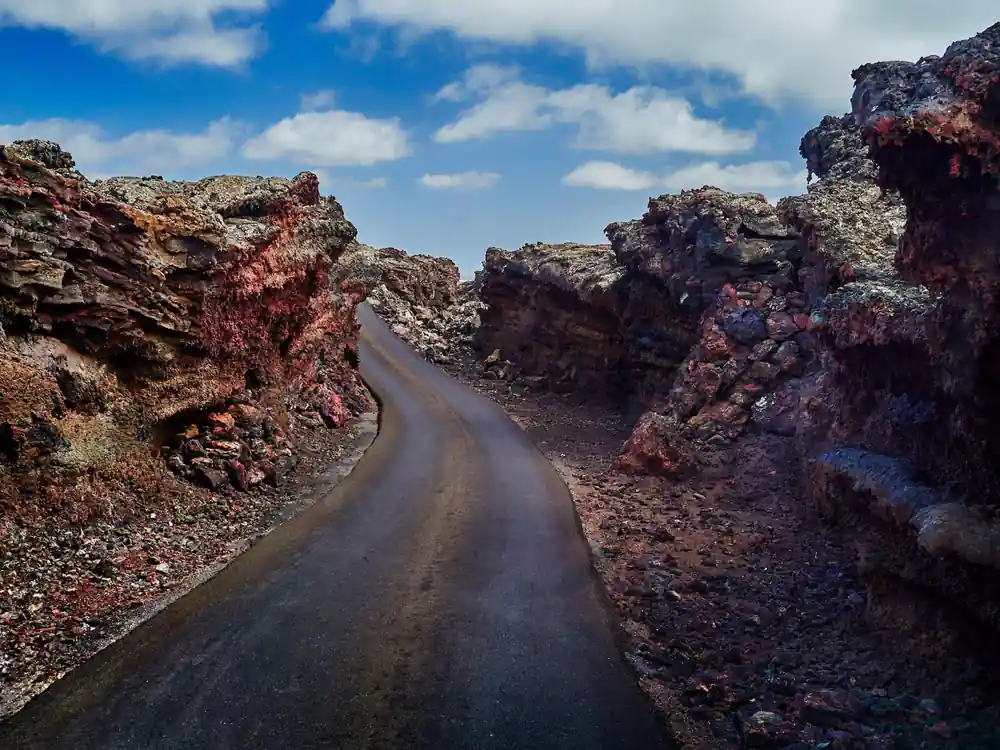
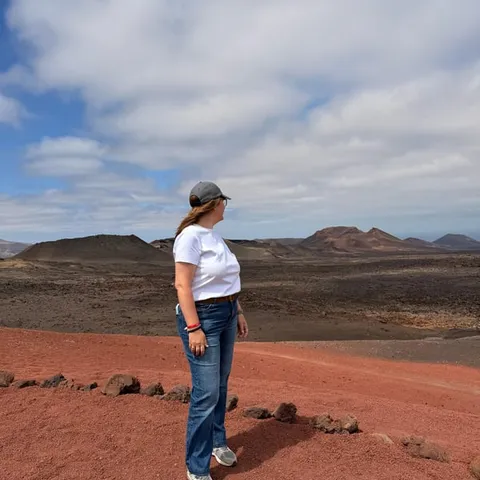
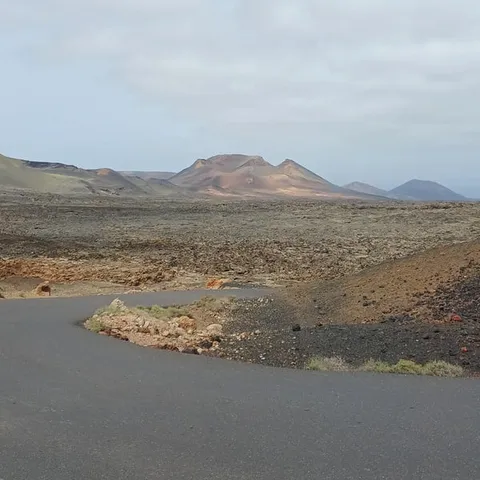
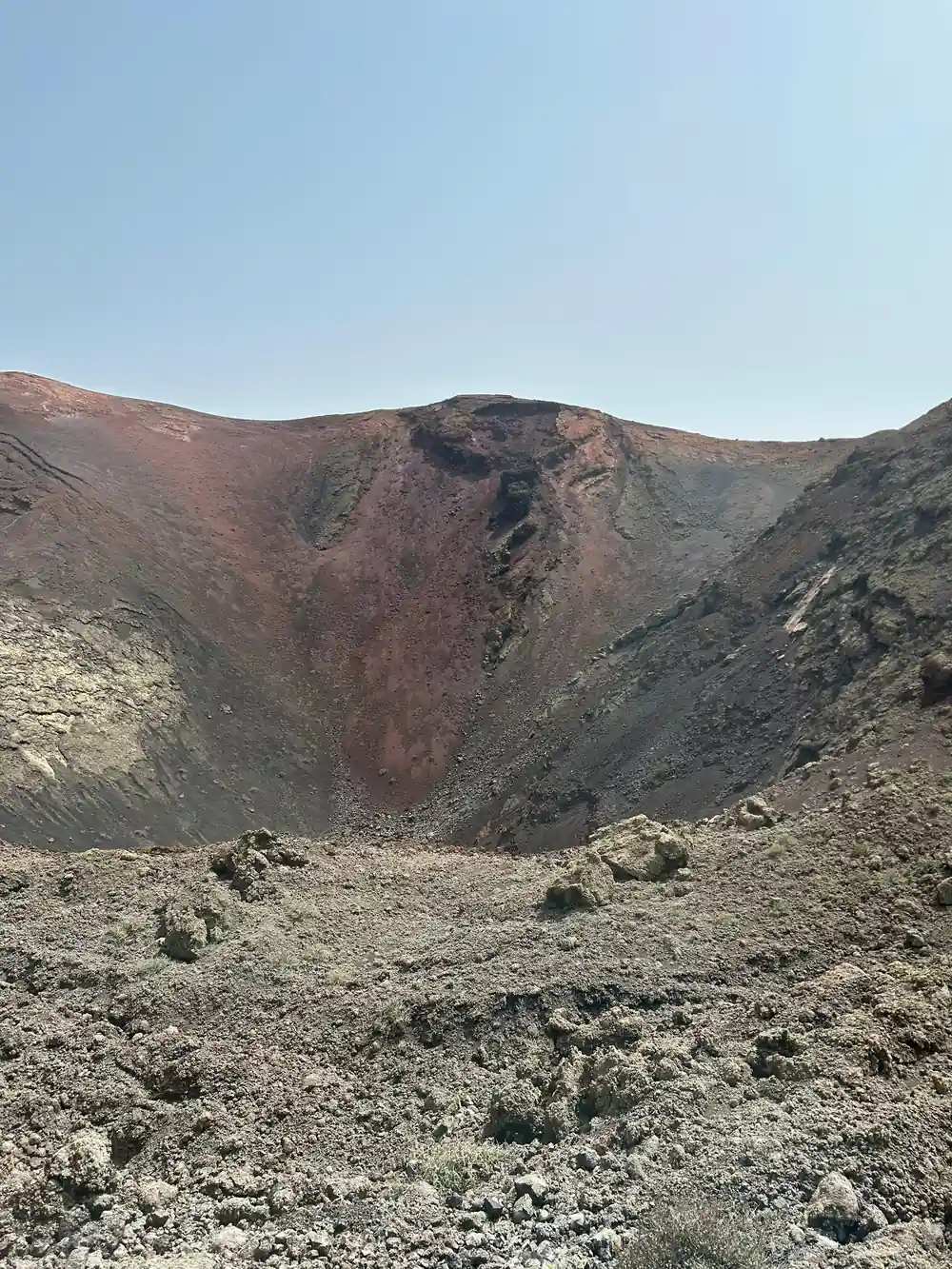
Craters, lava flows and lunar-like landscapes reflect the heat of the earth. On the Islote de Hilario, geothermal activity shows that the subsoil still holds part of that heat.
The coach route on its own, or on a day tour
Before the ride
What the Route of the Volcanoes is
The Route of the Volcanoes is a coach route through Timanfaya National Park, conceived by César Manrique and accompanied by an audio narrative that invites you to read the landscape.[1] CACT describes it as a route of around 14 kilometres through the main core of the eruptions.[1]
The Canary Islands park authority gives different figures for the same guided bus route: 12 km, 45 minutes, and a circular course between 251 m and 453 m of altitude.[3] The Fundación César Manrique dates the on-site works at Timanfaya, which built the El Diablo restaurant and the route, to 1970, with collaborators including Eduardo Cáceres, Jesús Soto and Luis Morales.[8]
The LZ-67 road between Tinajo and Yaiza gives access to the park's facilities, and inside the park it is built from the same lava materials as the landscape, with no painted road markings.[9][10] Signs at the access points carry the El Diablo logo designed by César Manrique, made from the timber of decommissioned boats; his original ink drawing of the devil is dated 1968.[10][11]
How long the coach ride takes
CACT's ticket page lists a 35-minute coach route, while CACT's own FAQ says the tour bus departs every 20 minutes and the tour lasts approximately 40 minutes.[1][2] The Canary Islands park authority gives 45 minutes for the route.[3] MITECO's Montañas del Fuego page also lists a duration of 45 minutes, without saying whether that is the coach ride or the whole visit.[12]
For the whole Montañas del Fuego visit, CACT's ticket card allocates a 90-minute slot, while its visitor guide gives a visit duration of approximately 1 hour and 15 minutes.[1] CACT's 'What to do' section describes the same coach activity as an approximately 35-minute route.[1]
For a smaller group, CACT sells the Insólita Experience at Montañas del Fuego, which starts at 08:45, lasts 120 minutes and runs only on Mondays, Wednesdays and Saturdays, from €46.30.[1]
A dark road curls between red cinder cones inside the park
Tickets, times and timed entry
The general Montañas del Fuego ticket is listed from €30.00 and includes the 35-minute coach route, the geothermal demonstrations, access to Islote de Hilario and a volcanic landscape viewpoint.[1] Children aged 0 to 6 enter free.[1]
There are no ticket sales at the box office, and tickets must be bought online in advance for a fixed date and time.[2][7] CACT asks visitors to arrive 15 minutes before their booked time, notes there are no waiting areas for early arrivals, and says that arriving outside the scheduled time makes the ticket no longer valid, with no changes or refunds.[2] If an entry time is not available, that slot's quota is already full.[2]
Montañas del Fuego is open every day, 365 days a year.[1] Opening hours differ by publisher: CACT gives 09:30 to 15:45, Turismo Lanzarote 09:00 to 16:45, and MITECO 9:00 to 17:00.[1][12][13] Turismo Lanzarote names 1:00 p.m. as the recommended time for the visit.[14]
The commentary on board
The narration on the park coach is an audio guide. CACT's FAQ says it is offered in Spanish and English, with explanations about the landscape, while the 'What to do' section of CACT's site lists Spanish, English and German for the same route.[1][2]
CACT's visitor guide says the Route of the Volcanoes has adapted coaches.[1] The tour booked from this site lists its own live tour guide in English, French, German or Spanish, along with skip-the-line entry and 61 pickup location options.[4]
For families, CACT's guide notes that access with a pushchair can be difficult and recommends bringing a baby carrier, and says the restaurant and cafeteria have high chairs. Pets are not allowed, except assistance dogs.[1]
12-14 km
The Route of the Volcanoes measures 12 km per the Canary Islands park authority, or around 14 kilometres per CACT.[1][3]
What you see from the coach windows
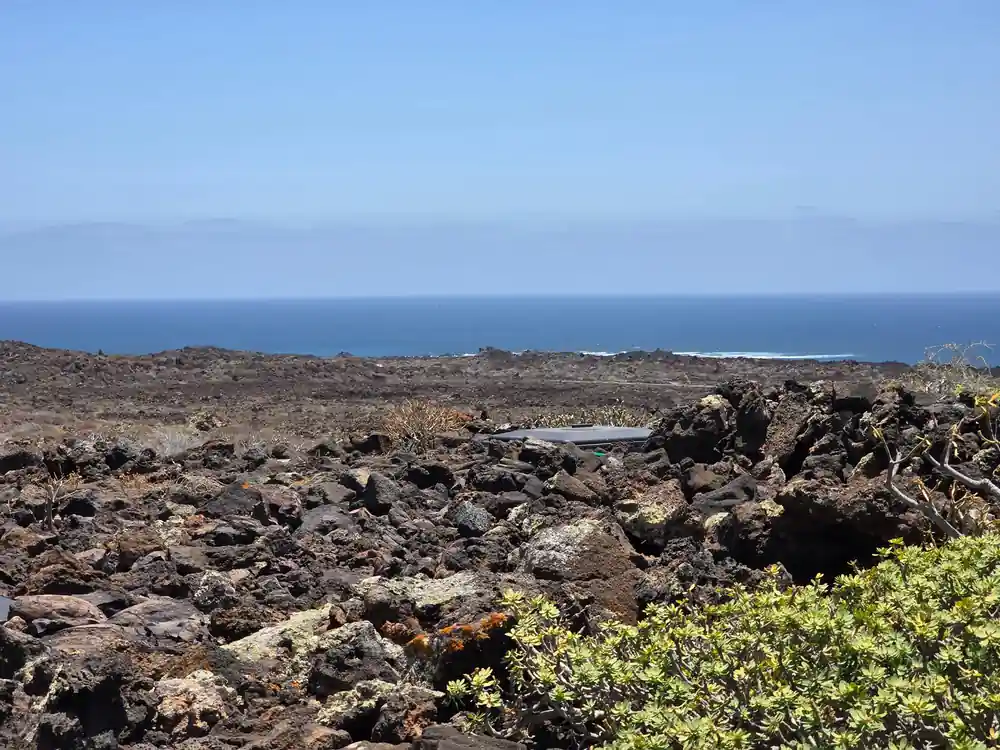
From the Islote de Hilario, the view opens onto a sea of lava with more than 25 craters concentrated in just a few square kilometres, according to CACT.[1] One valley on the route, the Valle de la Tranquilidad, is named after the Moon's Sea of Tranquility, where Apollo 11 landed.[1]
The park's lava takes two main forms: very viscous aa lava that cools into rough, impassable malpaís, and more fluid pahoehoe with a smooth or ropy surface.[15] The Lanzarote Film Commission says several films inspired by other planets were shot in Timanfaya, among them Enemy Mine, Krull, Mission Stardust, Stranded and Operation Ganymed, and even westerns such as Take a Hard Ride.[16]
CACT recommends photographing the geyser area, the natural oven, the Devil figure and the Route of the Volcanoes.[1] The Devil sculpture, the symbol of the National Park, welcomes visitors on the road to Montañas del Fuego.[1] CACT adds that Timanfaya has been chosen for its geological conditions to prepare part of astronauts' training before planetary expeditions.[1]
Geothermal demonstrations at Islote de Hilario
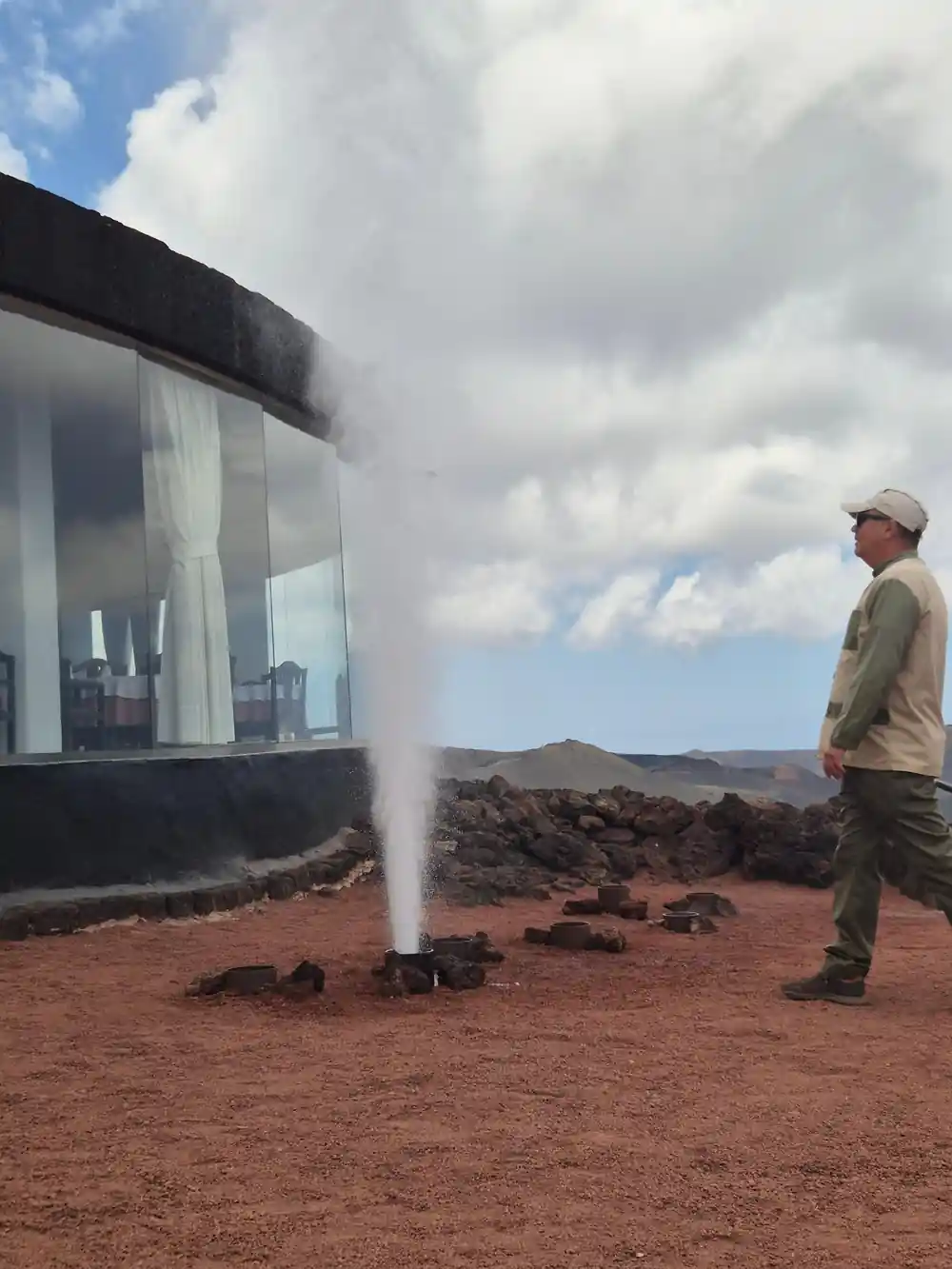
The general ticket includes the geothermal demonstrations at Islote de Hilario.[1] IGME describes artificial geysers made by pouring cold water into boreholes, and plants put into a hole so visitors can watch them burn.[17]
IGME puts the surface temperature there at about 250°C in one part of its page and between 100 and 120°C in another, with more than 600°C at 13 metres down, and links the heat to a residual magma chamber about 2 to 4 km deep.[17] CACT says geothermal activity on the Islote de Hilario shows that the subsoil still holds part of the earth's heat.[1]
Islote de Hilario is not the only hot spot. The park authority names it, the Casa de los Camelleros and the floor of the Timanfaya crater as the most important of the park's geothermal anomalies, where surface temperatures exceed 100°C.[18] Since the 1980s, CSIC teams have continuously researched the park's seismic, volcanic and geodesic behaviour.[19]
Rules, facilities and El Diablo
It is not permitted to explore Timanfaya National Park freely by car or on foot, and visitors driving to Montañas del Fuego must remain inside the vehicle from El Taro to the car park on the Islote de Hilario.[1][2] The park authority advises leaving a hire car in that car park, since the park's routes are done on foot or aboard internal park buses.[9]
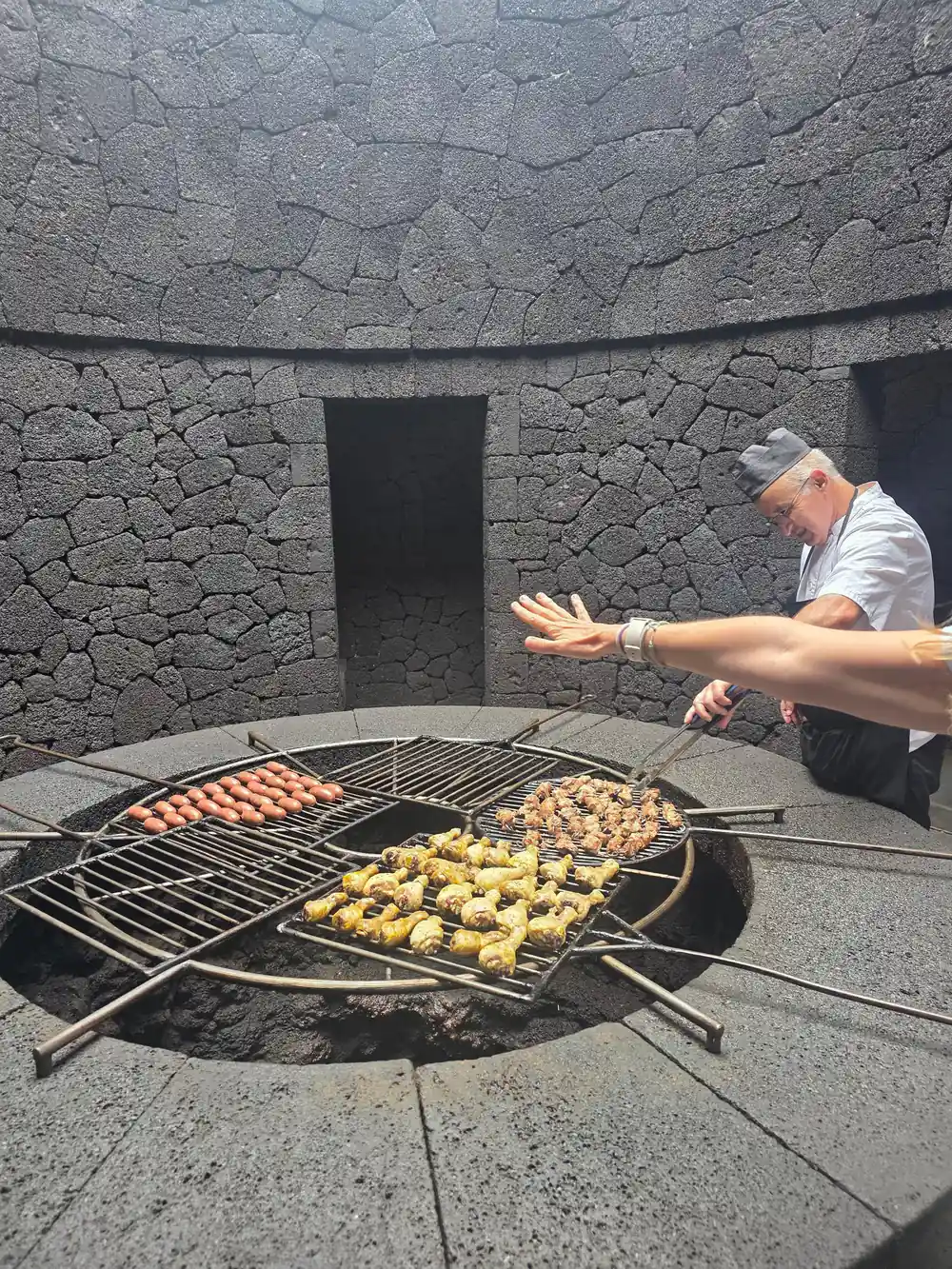
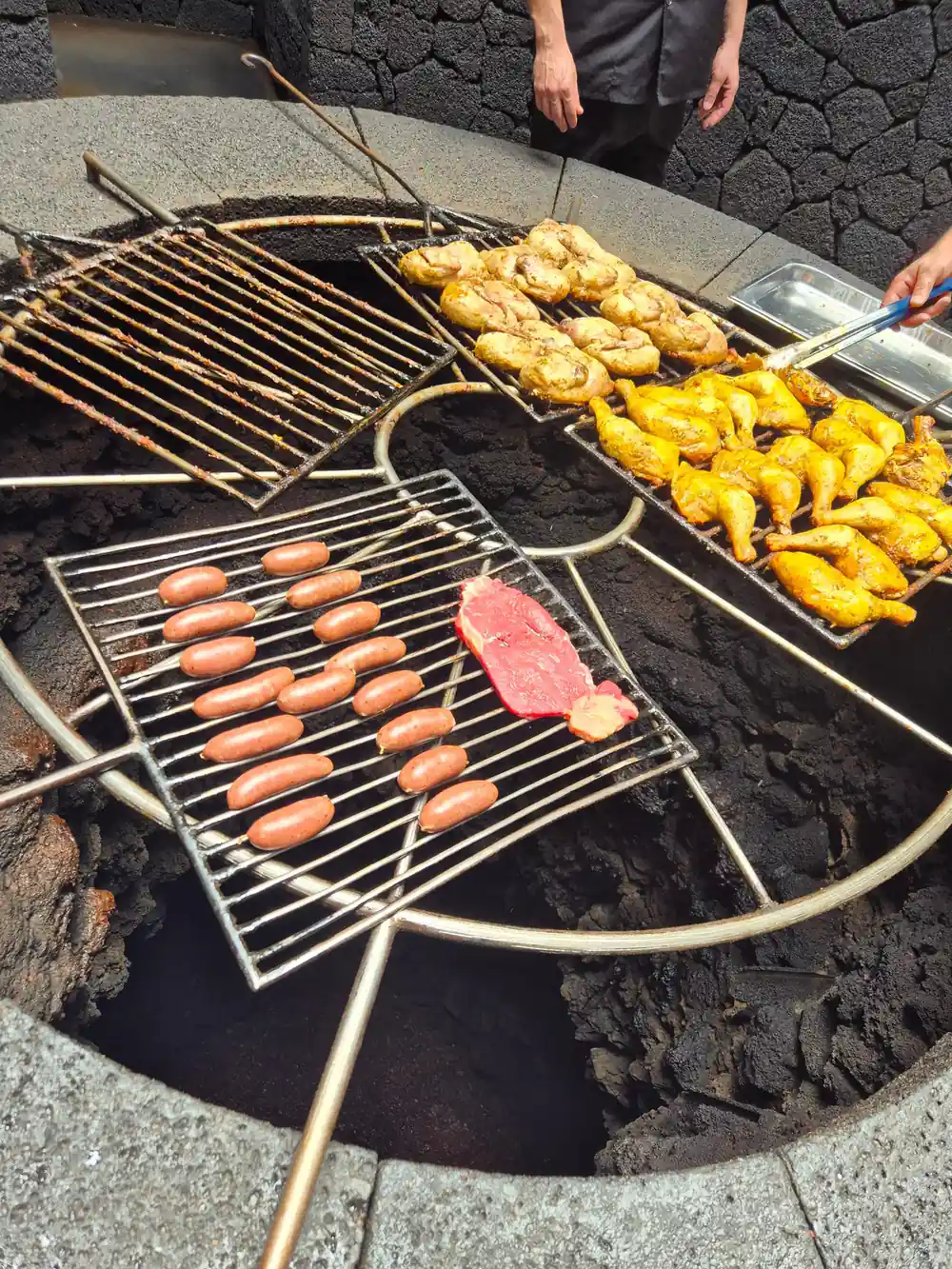
Islote de Hilario's facilities include a car park, cafeteria, restaurant, souvenir shop and restrooms, and Montañas del Fuego has two accessible toilet cabins.[12][20] The El Diablo restaurant does not accept reservations, and its grill sits above a five-metre well where the earth's natural temperature reaches around 250 degrees.[1] Its dining room, conceived by César Manrique, looks onto the malpaís lava field through a large circular glass wall.[1] In its centre, a small glazed garden called the Jardín Muerto, with the skeleton of a dromedary and a burned tree trunk on volcanic ash, pays tribute to the legend of Hilario.[1]
The coach is not the only authorised way through the park: the Ayuntamiento de Yaiza counts the camel route as one of five authorised routes in Timanfaya.[21] The Tremesana route is a compulsorily guided walk of 3.5 km and about 3 hours, free of charge but booked online at least 25 to 30 days ahead, since groups are small.[22]
How long the coach route takes, by publisher
The same Route of the Volcanoes coach ride, as each official page states its duration.[1][2][3]
Price a Timanfaya tour for your group
Each amount is that listing's own "from" price in US dollars, and the calculator applies the same listed figure to every traveller.[4][5][6]
Coach route numbers by publisher
Riding the volcano coach
Book a fixed slot online
Montañas del Fuego sells no tickets at the box office, only online in advance.[2]
Arrive 15 minutes early
There are no waiting areas on site for anyone who arrives too early.[2]
Board the park coach
CACT's FAQ says the Ruta de los Volcanes tour bus departs every 20 minutes.[2]
Listen to the audio narrative
The audio guide explains the landscape; CACT's FAQ lists Spanish and English.[2]
Pass the Valle de la Tranquilidad
Its name refers to the Moon's Sea of Tranquility, where Apollo 11 landed.[1]
Ride the Route of the Volcanoes on the Timanfaya day tour
from US$103Reserve now & pay later