The essentials
- Cold water flashed into steam, and dry plant matter set alight, both powered by the same geothermal heat.[1]
- IGME states the surface reaches about 250°C, with more than 600°C measured at 13 metres depth.[1]
- IGME's own page also gives a lower 100 to 120°C surface figure elsewhere on the same listing.[1]
- Both demonstrations are bundled into the general €30.00 Montañas del Fuego admission.[2]
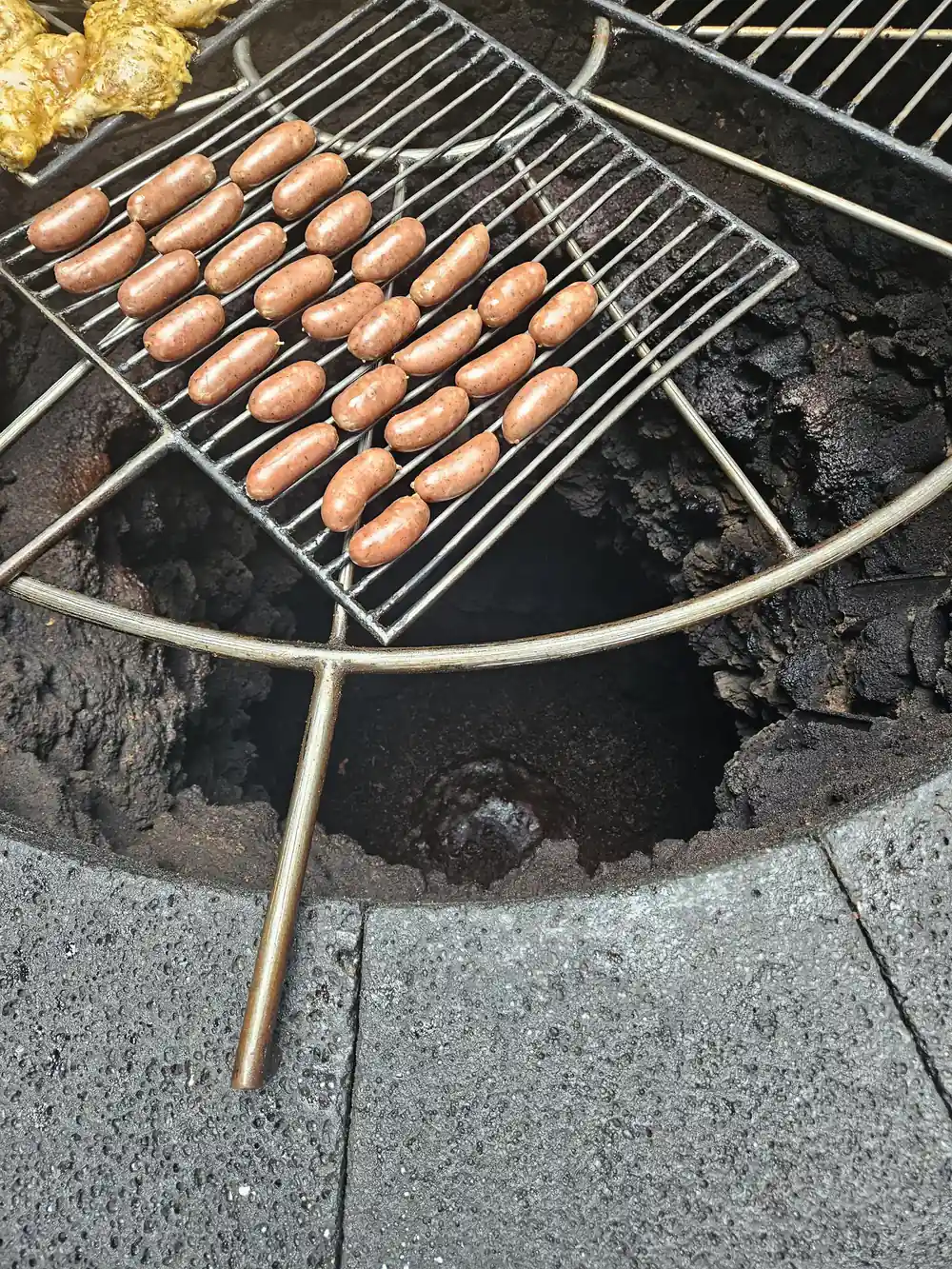
- The restaurant's grill sits above a five-metre well near 250 degrees, and its food is priced separately.[2][3]
| Water geyser | Brushwood fire | Volcano grill | |
|---|---|---|---|
| What happens | Cold water poured into a borehole shoots out as steam[1] | Dry plants set near a vent catch fire from the heat[1] | Food grills over a natural hot-air vent[2] |
| Heat stated | About 250°C at the surface[1][4] | About 250°C at the surface[1][4] | About 250°C in a five-metre well[2] |
| Where | A borehole at Islote de Hilario[1] | A vent at Islote de Hilario[1] | El Diablo restaurant, on Islote de Hilario[2] |
| Part of the ticket | Yes, in the general admission[2] | Yes, in the general admission[2] | No, food is priced separately[3] |
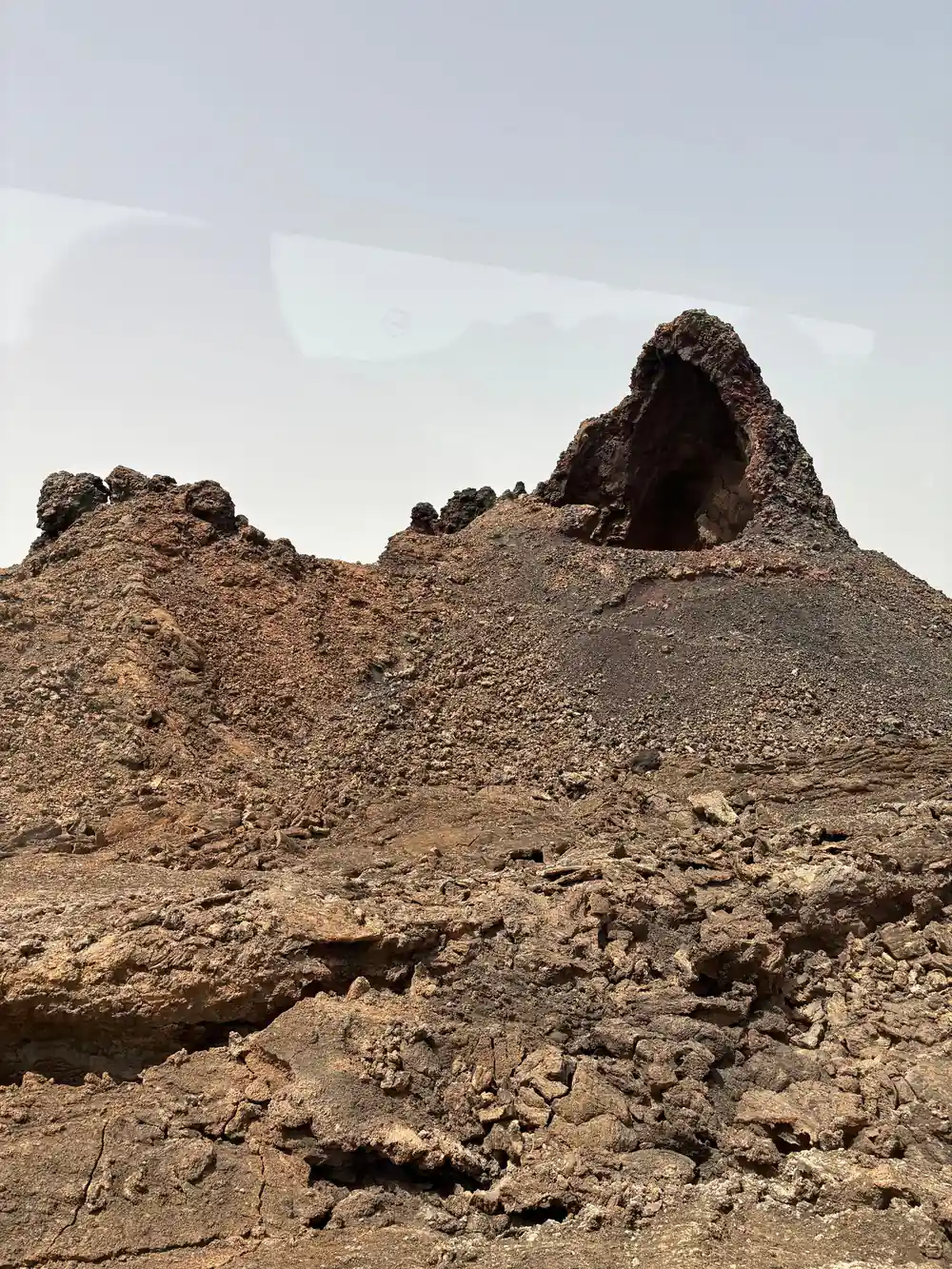
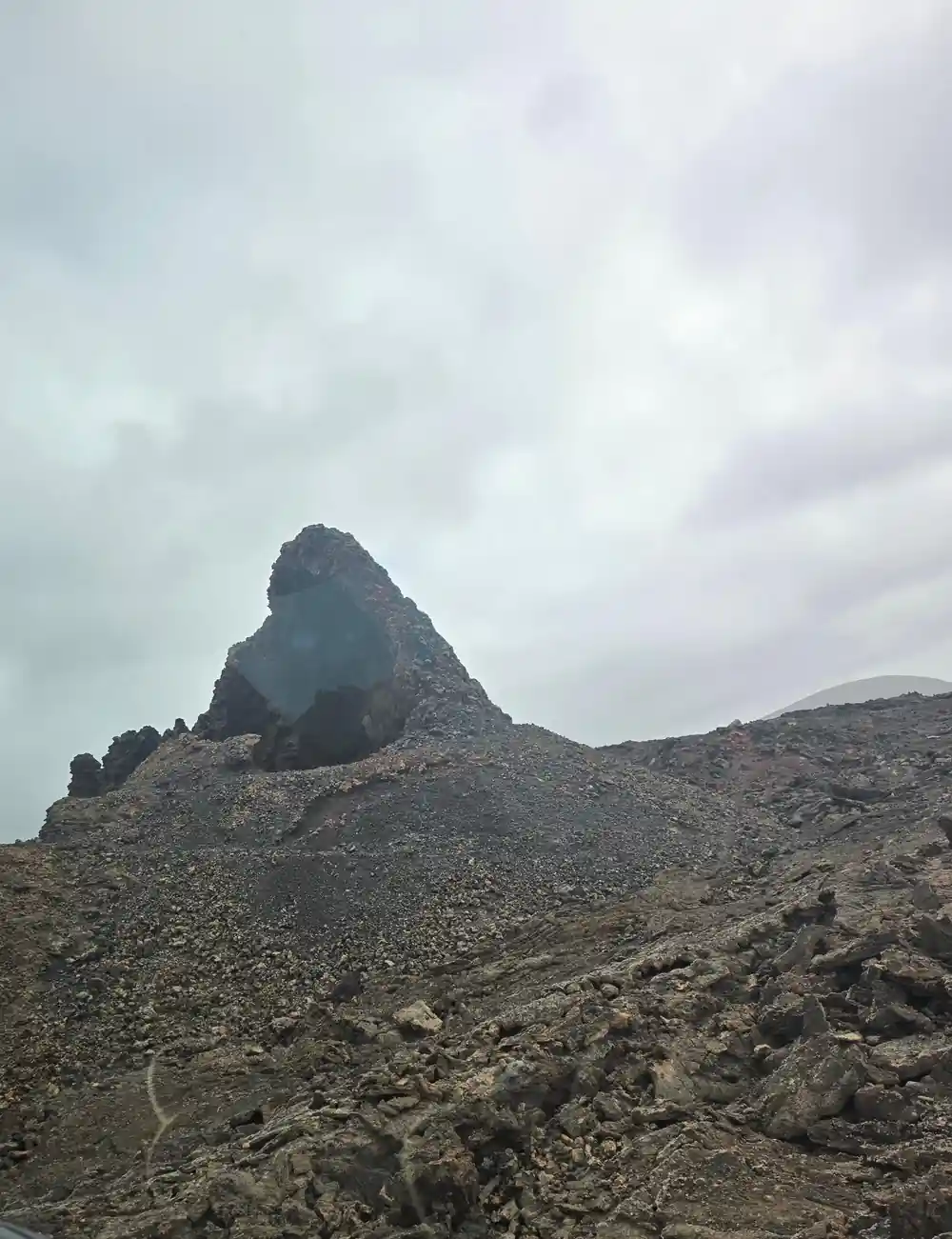
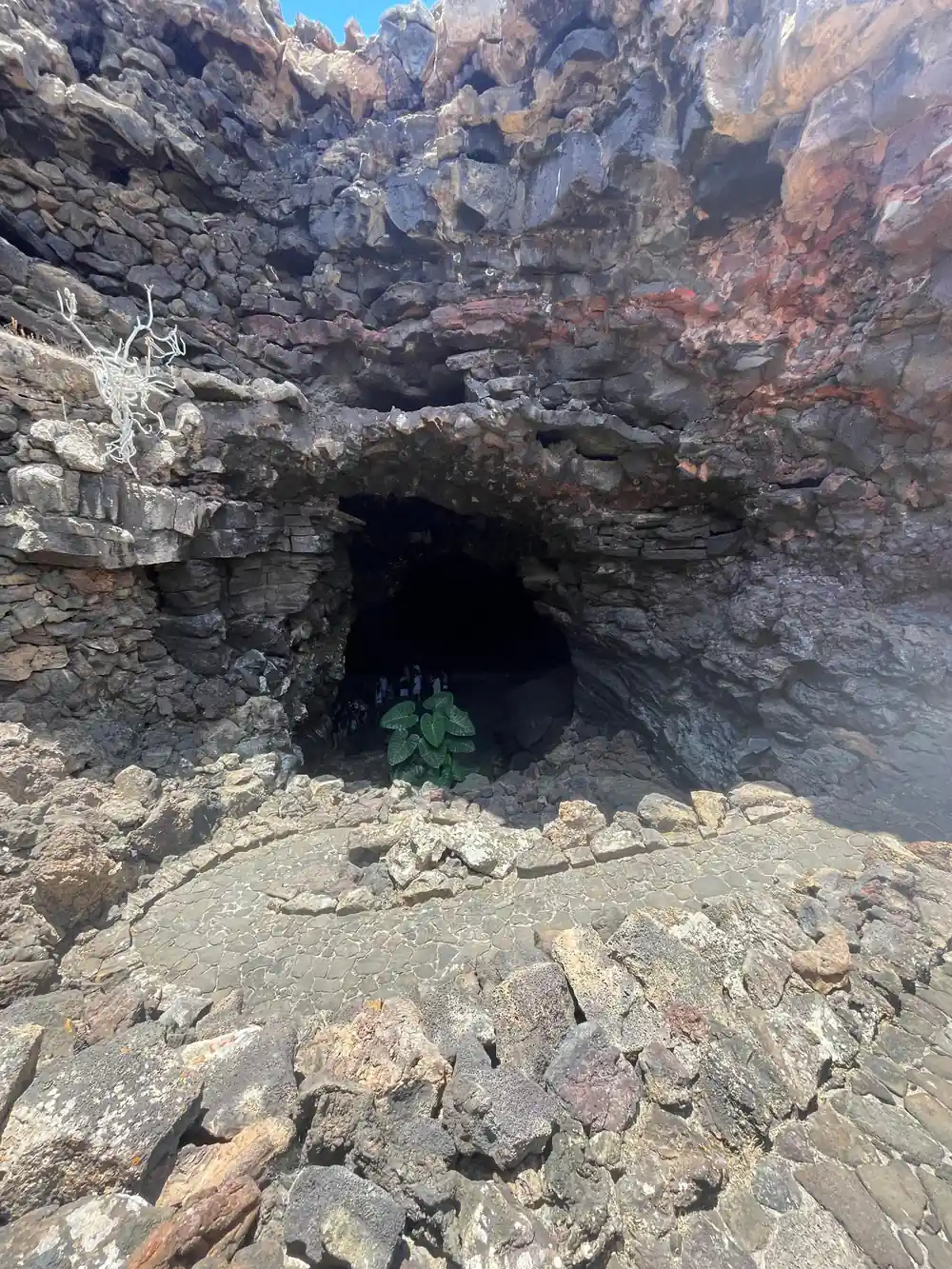
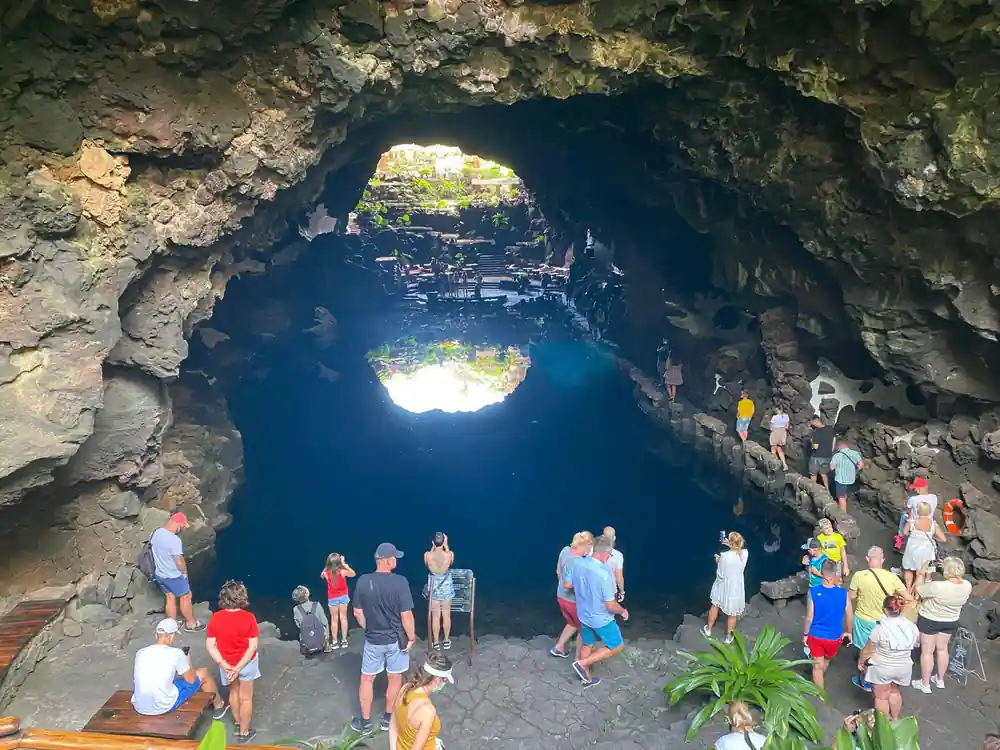
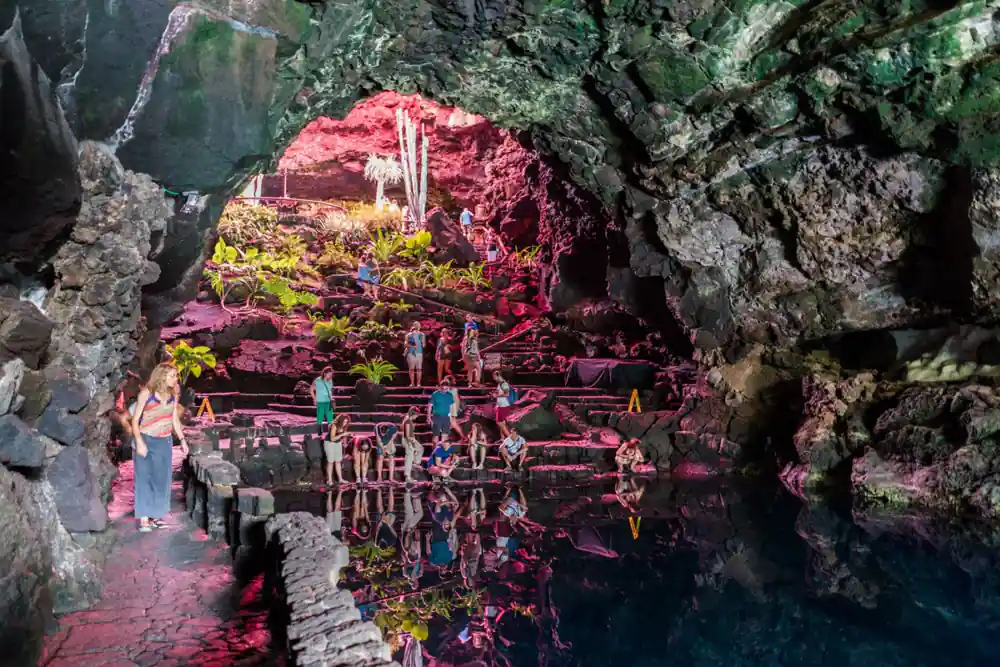
Craters, lava flows and lunar-like landscapes reflect the heat of the earth. On the Islote de Hilario, geothermal activity shows that the subsoil still holds part of that heat.
Geyser, fire, or the volcano grill: what to prioritize
Before setting off
While you're there
Where Islote de Hilario sits inside the park
Islote de Hilario sits inside Montañas del Fuego, and the road in from El Taro requires every visitor to remain inside the vehicle until the car park.[2] Its facilities include a car park, cafeteria, restaurant, souvenir shop and restrooms.[7]
The LZ-67 road connecting Tinajo and Yaiza is what gives access to Timanfaya's different facilities, Islote de Hilario among them.[8] In the car park itself, mind the car doors: the slope can cause them to hit other vehicles.[2]
There is no direct public transport into the park either. Intercity bus lines reach only as far as the nearby towns of Tinajo and Yaiza, and from either one a taxi covers the rest of the way to Islote de Hilario.[8]
The Timanfaya National Park geysers explained
One demonstration uses boreholes in the volcanic ground: cold water poured into a borehole meets the heat below and bursts back out as steam, an artificial geyser rather than a natural one.[1]
The heat that powers it is real and measured. IGME states the surface at Islote de Hilario reaches about 250°C, with more than 600°C recorded at 13 metres depth, a figure corroborated by Geoparque Lanzarote, the UNESCO Global Geopark that also covers this ground.[1][4]
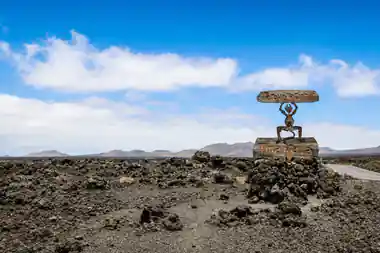
The Route of the Volcanoes coach tour in the same ticket was conceived by César Manrique and is accompanied by an audio narrative, and CACT's FAQ says its buses depart every 20 minutes.[2][5] CACT's guide also points out the Valle de la Tranquilidad, named after the Moon's Sea of Tranquility where Apollo 11 landed, and the Devil of Timanfaya sculpture, the park's symbol, which welcomes visitors on the road to Montañas del Fuego.[2]
Steam rising where cold water meets Timanfaya's volcanic heat
The brushwood fire demonstration
A second Timanfaya fire demonstration uses the same ground at Islote de Hilario: plants are placed into a hole in the volcanic surface so that visitors can watch them catch fire and burn.[1]
Both demonstrations draw on the same geothermal anomaly at Islote de Hilario, which IGME explains as the result of a residual magma chamber sitting around 2 to 4 kilometres below the surface.[1]
From Islote de Hilario the view itself makes the same point: CACT counts more than 25 craters concentrated in just a few square kilometres around this one spot.[2]
How hot the ground really is
IGME's own page carries two different figures for the same geosite. Its main description states a surface temperature of about 250°C with more than 600°C at 13 metres, while the page's own scientific-interest section instead gives 100 to 120°C at the surface and 610°C at the same 13-metre depth.[1]
Geoparque Lanzarote's own listing matches the first, higher figure: about 250°C at the surface and more than 600°C at 13 metres, describing Islote de Hilario as part of its wider UNESCO Global Geopark network.[4]
Whichever figure is right, the rules on the ground stay the same. CACT asks drivers to remain inside the vehicle from El Taro to the Islote de Hilario car park to preserve the protected National Park, and Turismo Lanzarote says it is not possible to walk over the lava or other volcanic material.[2][6]
250°C
About how hot IGME and Geoparque Lanzarote both say the surface gets at Islote de Hilario.[1][4]
El Diablo's volcano grill
For a Timanfaya National Park BBQ, the place is El Diablo, the restaurant on Islote de Hilario, which cooks over volcanic heat rather than a fire. Its grill sits above a five-metre well where the earth's natural temperature reaches around 250 degrees, and mains cooked this way range from €18.00 for chicken thighs to €26.00 for entrecôte.[2][3]
The dining room itself, conceived by César Manrique, opens onto the malpaís lava field through a large circular glass wall, and does not take reservations; tables go to whoever arrives first.[2]
Inside is the Jardín Muerto, a small glazed garden in the centre of the restaurant with a dromedary skeleton and the trunk of a dry, burned tree on volcanic ash, a tribute to the legend of Hilario.[2]
Is it included in your ticket?
Yes. The general €30.00 Montañas del Fuego ticket bundles the geothermal demonstrations at Islote de Hilario together with the 35-minute coach route along the Route of the Volcanoes.[2] El Diablo's food is not part of that ticket; it is priced and ordered separately.[3]
GetYourGuide's Timanfaya listings name this stop differently: a five-hour tour from US$68 lists the Islet of Hilario among its stops, while a nine-hour tour from US$102 and a two-hour express tour from US$66 list Timanfaya National Park without naming the islet.[9][10][11]
CACT's rules say a general ticket bought with no visit date selected is valid for 3 months from the date of purchase, but that option does not exist here: a Montañas del Fuego ticket must be bought for a fixed date and time.[5][12]
Visiting safely with children
General park rules apply to every visitor, children included: stay inside the vehicle from El Taro to the car park, and do not walk on the lava or other volcanic material anywhere in the park.[2][6]
The park's interior cannot be explored freely on foot or by car, a rule CACT gives to protect the park's fragile ecosystem.[5] Families will find a car park, cafeteria, restaurant, souvenir shop and restrooms at Islote de Hilario itself.[7]
Timanfaya's geological conditions have even been used to prepare part of astronauts' training before planetary expeditions, according to CACT's own description of Montañas del Fuego.[2]
How hot the ground gets at Islote de Hilario
IGME and Geoparque Lanzarote agree on the first two figures; the restaurant's grill well is a separate, shallower measurement.[1][2][4]
Price a Timanfaya tour for your group
Each amount is that listing's own "from" price in US dollars, and the calculator applies the same listed figure to every traveller. The €30 figure is the park ticket as CACT lists it.[2][9][10][11]
Numbers behind the demonstrations
Watching the demonstrations
Stop at Islote de Hilario
The car park, cafeteria and demonstrations sit inside the general park visit.[7]
Watch the artificial geyser
Cold water poured into a borehole makes it shoot out as steam.[1]
See the brushwood catch fire
Dry plant matter set near a vent catches fire from the heat alone.[1]
Learn why the ground is hot
A residual magma chamber sits around 2 to 4 kilometres below the surface.[1]
Notice El Diablo's grill
The restaurant's grill sits above a five-metre well near 250 degrees.[2]
See Timanfaya National Park on a guided day tour
from US$103Reserve now & pay later