The essentials
- Turismo Lanzarote says the island has a warm climate throughout the year, with an average annual temperature of about 21°C.[1]
- AEMET's normals make August the hottest month at Lanzarote Airport, averaging a 29.1°C daily maximum with essentially no rain.[2]
- Lanzarote Airport averages 111 mm of rain a year, and December is the wettest month with 29 mm.[2]
- CACT advises a cap or sun protection from June to September and warm clothing from October to April, as the area is windy.[3]
- Entry times are booked online in advance, a sold-out time means its quota is full, and there are no on-site waiting areas.[4][5]
| Summer, June to September | Winter, October to April | All year | |
|---|---|---|---|
| Temperature | August average high 29.1°C[2] | December mean 18.6°C[2] | Annual mean 21.1°C[2] |
| Rain | Essentially none in August[2] | 29 mm in December, the wettest month[2] | 111 mm a year on average[2] |
| Wind and sky | Sunshine practically all year[1] | A windy area, per CACT[3] | 72.5 cloudless days a year[2] |
| What to wear | A cap or sun protection[3] | Warm clothing for the wind[3] | Comfortable clothing and footwear[3] |
Lanzarote is pure geology, underwater and moon-like landscapes, pristine water, thirsty land, palm-tree oasis, harmony between men and nature.
Picking your month for Timanfaya
Sun and heat
A warm, dry island all year
Turismo Lanzarote describes a warm climate throughout the entire year, with an average annual temperature of about 21°C.[1] As the easternmost of the Canary Islands and the one closest to Africa, it says, Lanzarote has scarce rainfall and sun for practically the whole year.[1]
The climate figures on this page come from the AEMET station at Lanzarote Airport, and Rome2rio gives the drive from the airport to the park as about 28 km.[2][7] AEMET's 1981-2010 climate normals for that station give an annual mean temperature of 21.1°C, an average daily maximum of 24.8°C and an average daily minimum of 17.4°C.[2]
A University of La Laguna study classes the park's own climate as arid and subdesert, though much softened by the trade winds and the nearness of the sea.[8] UNESCO's summary of the island's Geopark lists thirsty land alongside its moon-like landscapes.[9]
The hottest months on the lava
AEMET's normals show August as the hottest month at Lanzarote Airport, with an average daily maximum of 29.1°C, a mean of 25.2°C and essentially no rain.[2] The station records an average of 2,986 hours of sunshine and 72.5 cloudless days a year.[2]
CACT's visitor guide for Montañas del Fuego recommends comfortable clothing and footwear, and says that in summer, between June and September, a cap or sun protection is advisable.[3] Lanzarote's relative humidity at the airport station averages 68% over the year.[2]
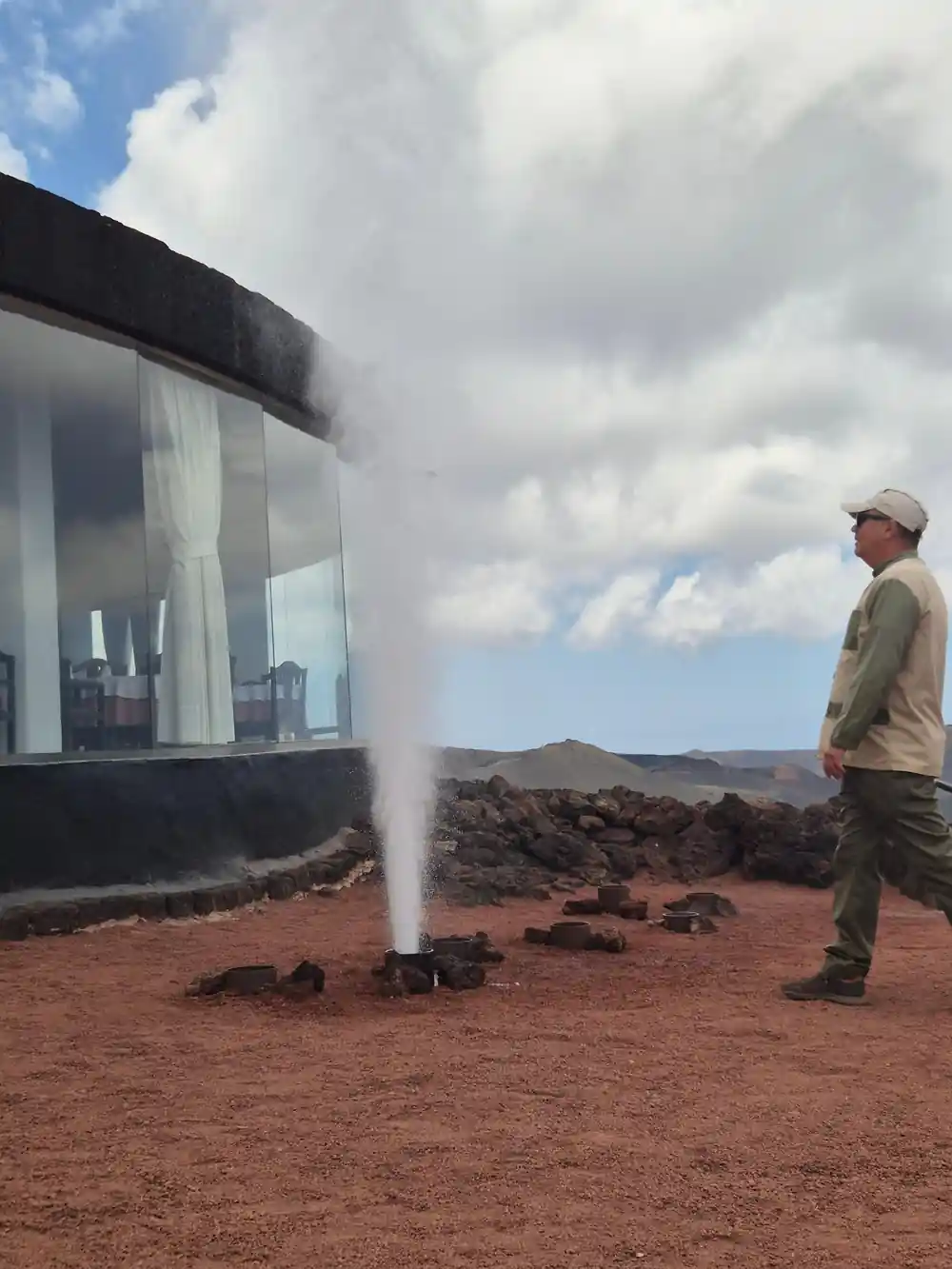
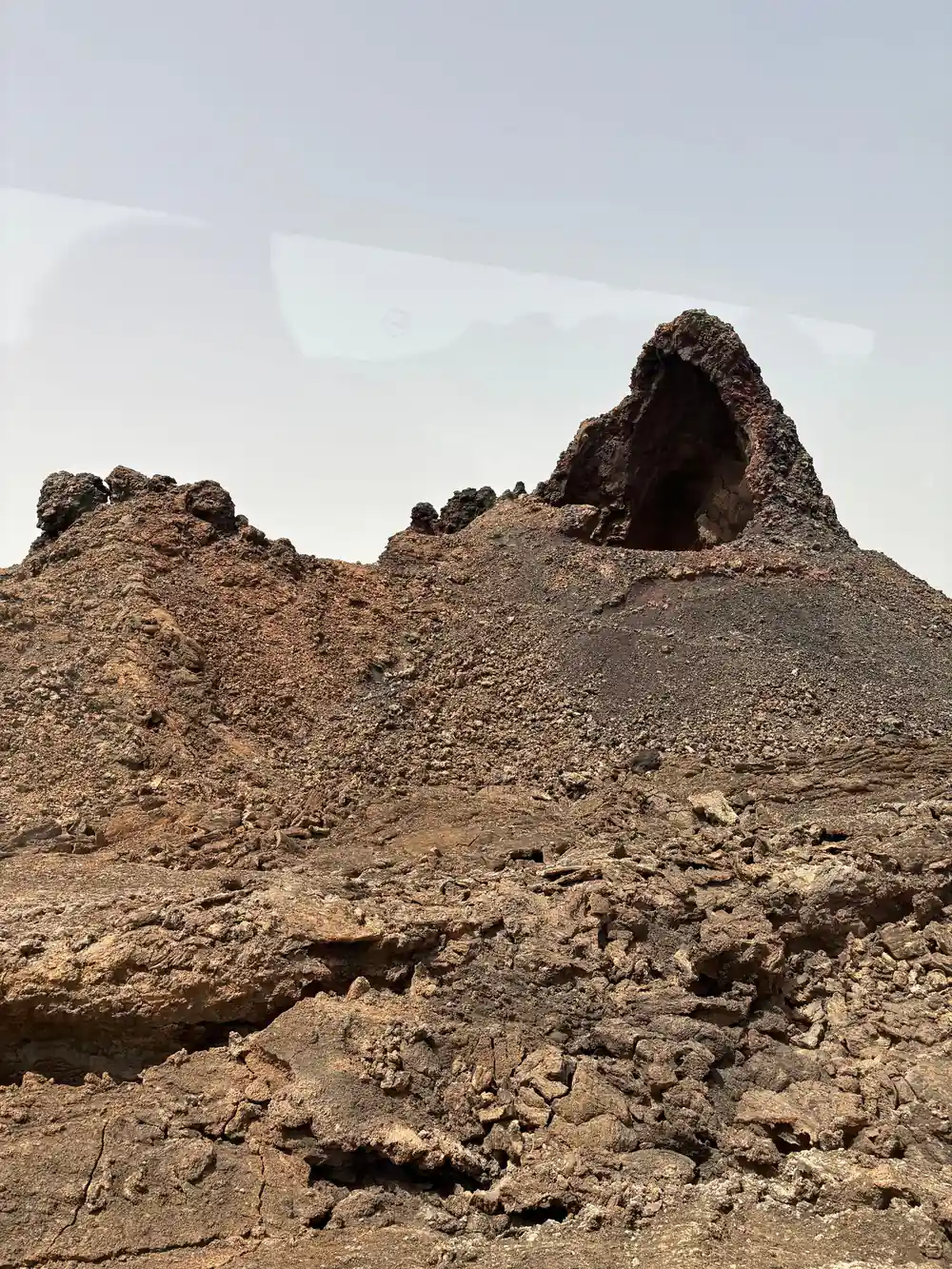
At Islote de Hilario the ground carries geothermal heat as well: IGME gives surface temperatures of about 250°C in one section of its page and 100 to 120°C in another, and links that heat to a residual magma chamber at around 2 to 4 km depth.[10] Walking over the lava or other volcanic material is not possible.[6]
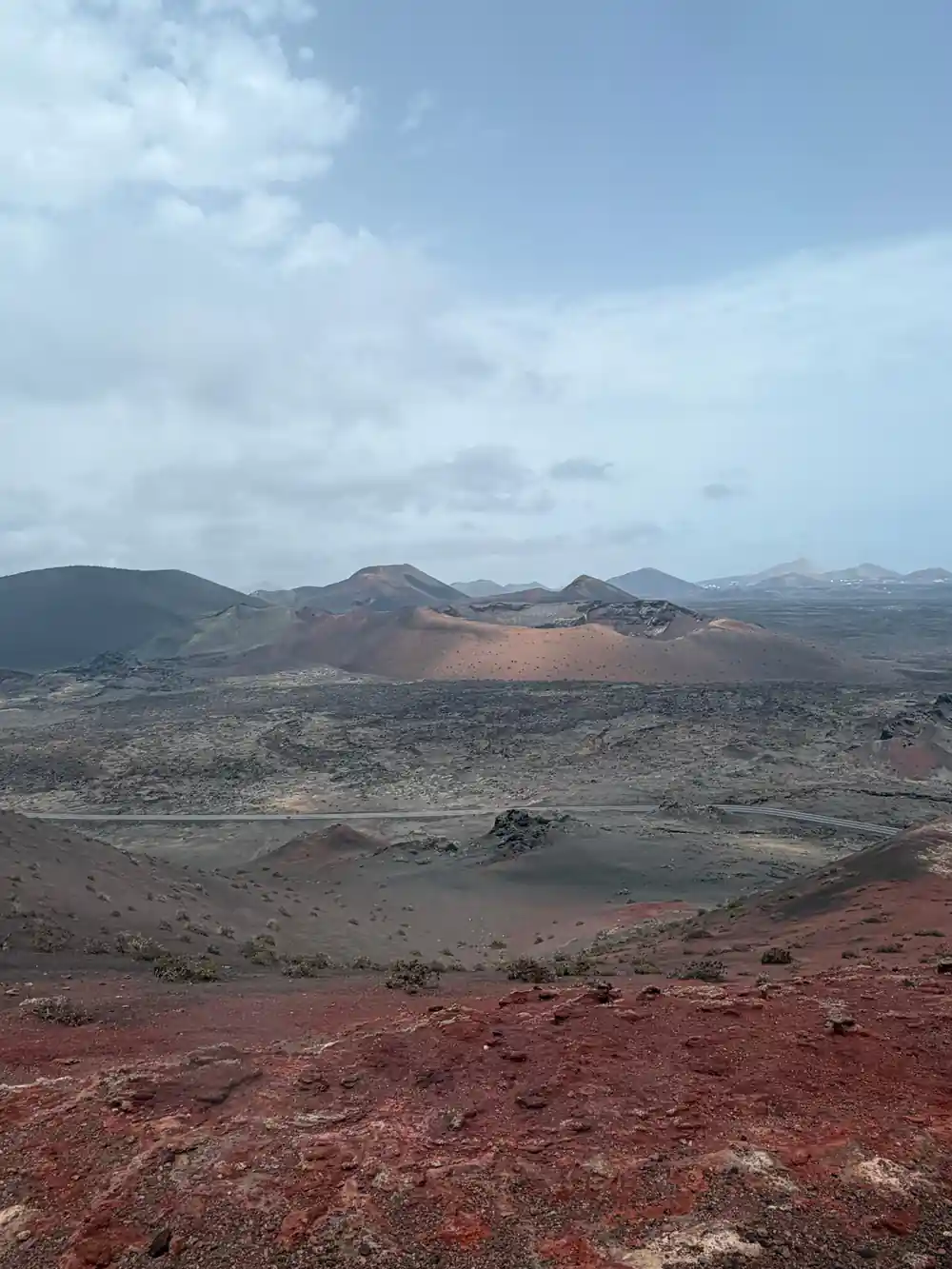
Clear skies over red cinder cones and dark lava
Winter: mild, windy and a little wetter
December is the wettest month on average at Lanzarote Airport, with 29 mm of rain, while staying mild at an 18.6°C mean temperature, an average high of 21.8°C and an average low of 15.4°C.[2] Across the whole year the station averages just 111 mm of rainfall.[2]
In winter, between October and April, CACT recommends warm clothing, because Montañas del Fuego is a windy area.[3] Inside the park, fig trees grow on private plots behind volcanic-stone walls built like zocos, which protect them from the strong prevailing winds, over about 5% of the park's area.[11]
Indoors, the Mancha Blanca visitor centre gives free access to an exhibition and an audiovisual programme offering an overview of the park in several languages, according to Turismo Lanzarote.[6] Its hours differ by publisher: MITECO gives 9:00 to 16:00 every day since 1 July 2023, and Turismo Lanzarote 9:00 a.m. to 4:45 p.m.[6][12]
Dew, dryness and life on the lava
Nighttime dew is an important source of moisture in Timanfaya, and the University of La Laguna study says it notably favours the development of life in an inhospitable and seemingly lifeless environment.[8] Lichens are almost the only living things able to colonise the lava directly.[8]
UNESCO says lapilli farming lets growers retain soil moisture and prevent erosion, making efficient use of the island's porous volcanic soils.[9] In the La Geria area, the lapilli or picón layer can be up to 3 metres thick in places, which is why vines there are planted in individual holes.[13]
On the sea of lava, about 70% of the park, vegetation is reduced to a lichen community covering large areas, and the steep cones and hornitos, about 20% of the surface, carry only lichens.[14]
111 mm
AEMET's climate normals give Lanzarote Airport an average of just 111 mm of rain a year.[2]
Queues and timed entry at Montañas del Fuego
Montañas del Fuego sells no tickets at the box office; they must be bought online in advance, and choosing a fixed date and time is mandatory.[4][5] If the entry time you want is not available, CACT says that time slot's quota is already full.[5] A fixed date and time is mandatory at Cueva de los Verdes too, another stop on the tour booked from this site.[4][15]
Plan to arrive 15 minutes before the time on your booking. You cannot enter before or after your slot, and there are no waiting areas inside the site or in the surrounding area for anyone who arrives too early.[5] Arriving outside your scheduled time voids the ticket, with no changes or refunds.[5] For the whole visit, CACT's visitor guide gives about 1 hour and 15 minutes, while its ticket card shows a 90-minute slot.[3]
The Ayuntamiento de Yaiza says the park receives more than half a million visitors a year, and that the pressure is already causing conservation problems, above all in Hilario, one of the three special-use zones.[16] Turismo Lanzarote's listing names 1:00 p.m. as the recommended time for the Montañas del Fuego visit.[6]
Opening hours through the year
CACT says Montañas del Fuego is open every day, 365 days a year, and gives 09:30 to 15:45 for the general ticket.[3] Turismo Lanzarote's current page gives 09:00 a.m. to 04:45 p.m., and MITECO's page gives 9:00 to 17:00.[17][18]
Jameos del Agua, a stop on the tour booked from this site, is open from 10:00 to 18:00 every day of the year, with last admission at 17:15.[15][19] Cueva de los Verdes is open from 09:30 to 16:45 every day, for a visit of about 50 minutes.[20] The free Tremesana guided walk must be booked online at least 25 to 30 days ahead, as groups are small.[21]
The camel rides keep their own calendar. The Ayuntamiento de Yaiza recommends 9:00 to 15:00 every day of the year except 25 December and 1 January, while MITECO lists the camel station's hours as 9:00 to 16:00.[22][23] The small-group Insólita Experience at Montañas del Fuego departs at 08:45 on Mondays, Wednesdays and Saturdays only.[3]
Weather and the day tour
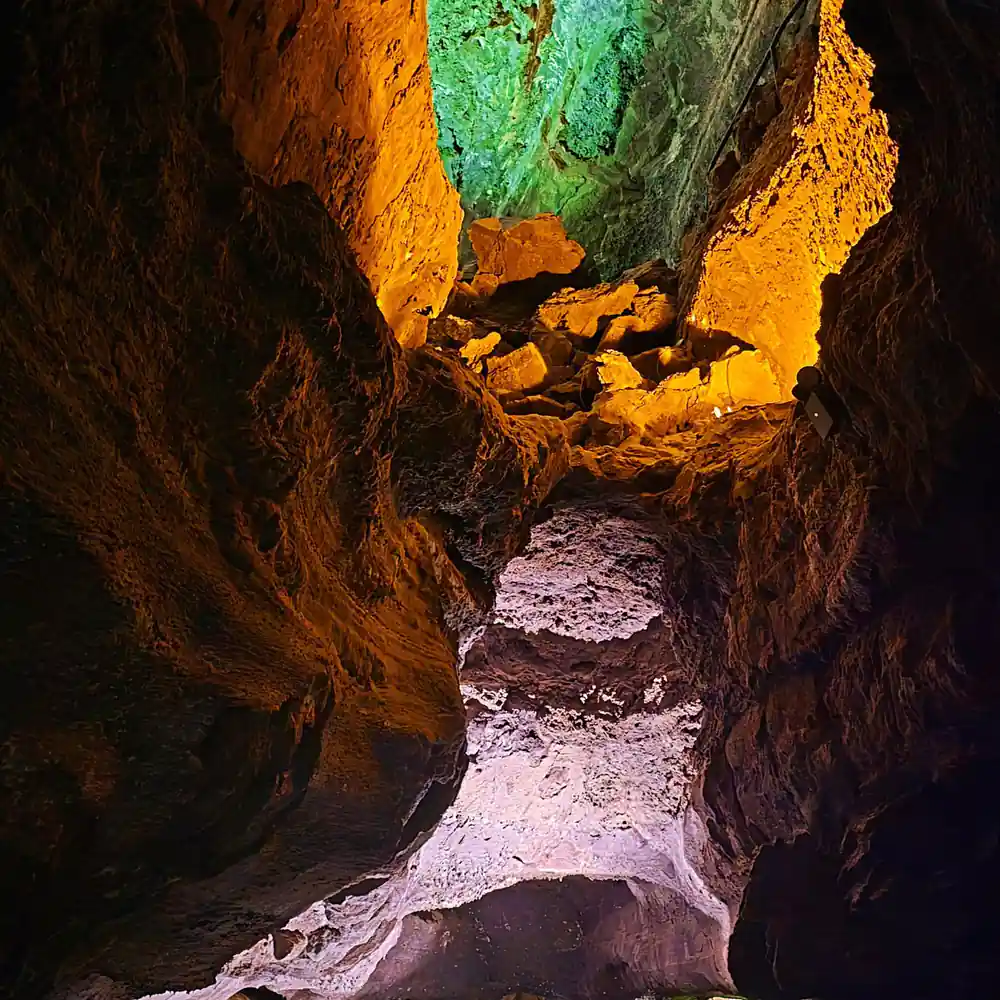
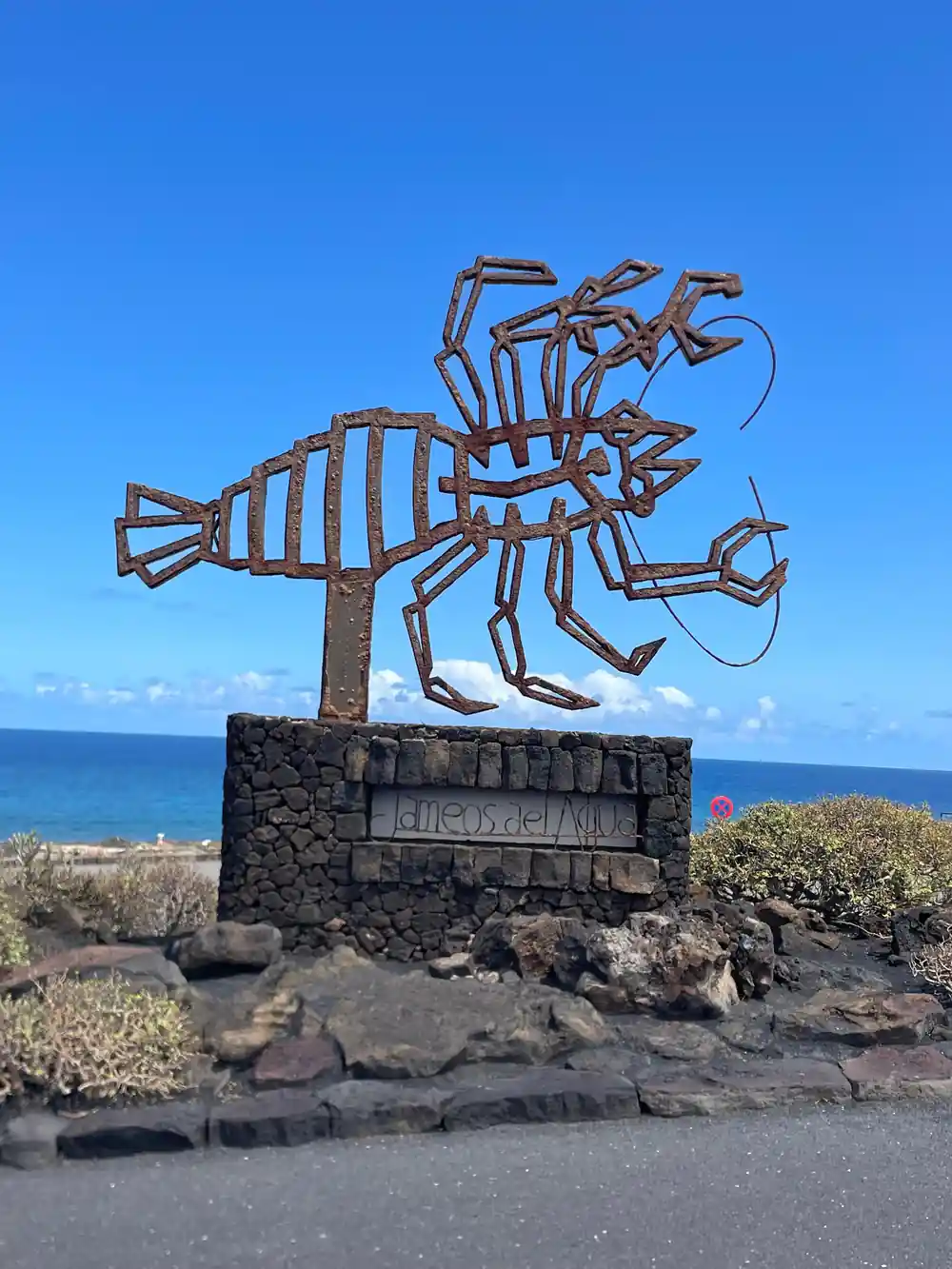
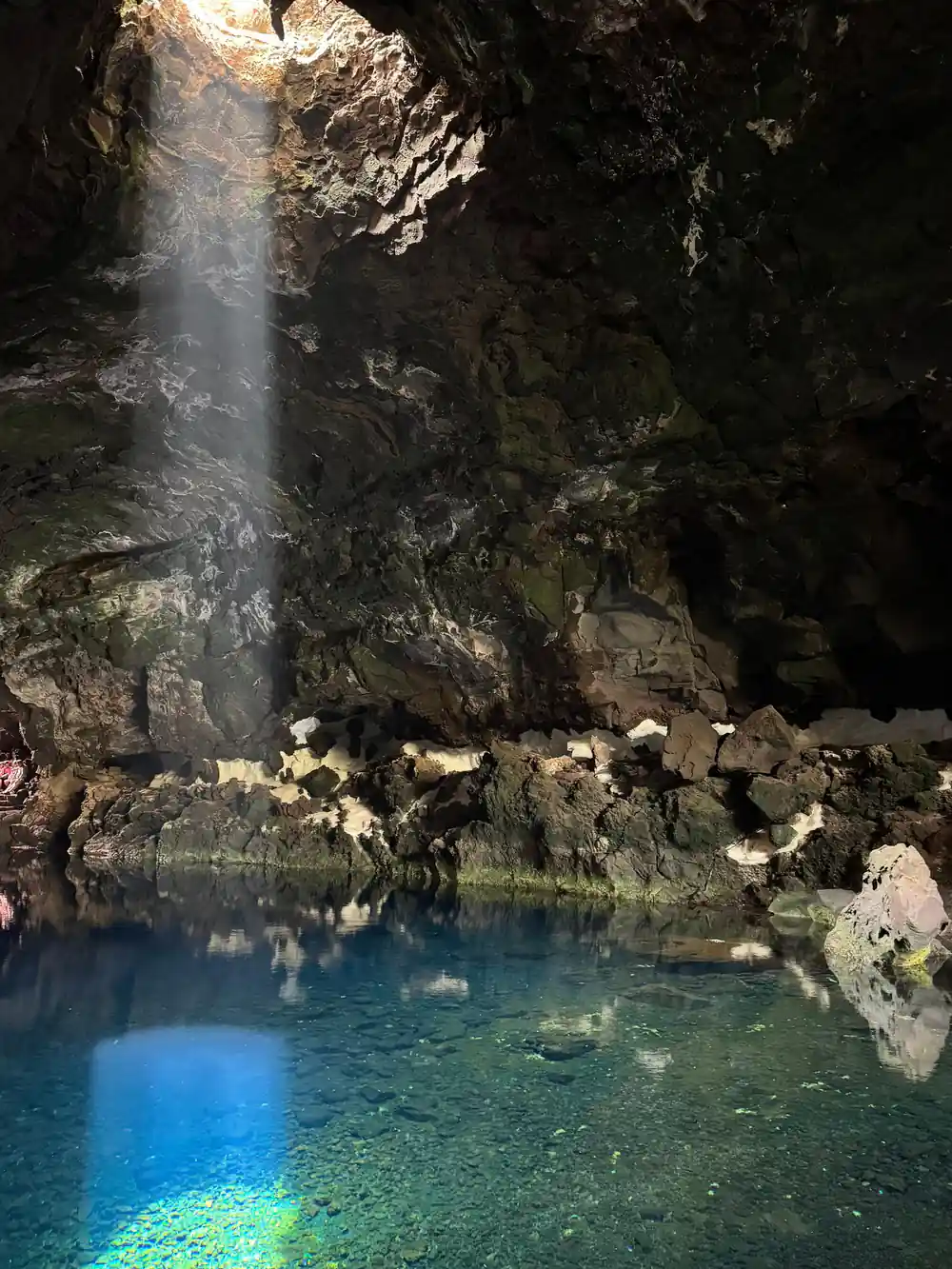
The tour booked from this site lasts 9 hours, lists pickup from 61 pickup location options, a live guide in English, French, German or Spanish and skip-the-line entry, and stops at Timanfaya National Park, Cueva de los Verdes and Jameos del Agua.[15] Two of those stops sit on the La Corona lava tube: Cueva de los Verdes is a conduit more than seven kilometres long, and the Jameos del Agua lake forms from seawater filtering through the volcanic tube.[19][20][24]
The listing offers reserve now and pay later, and free cancellation up to 24 hours in advance for a full refund.[15] For a shorter visit to the park alone, a 2-hour Timanfaya Express Tour from Yaiza, with skip-the-line entry and a live guide in Spanish, English or French, is listed from US$66.[25] For families, CACT describes pushchair access at Montañas del Fuego as difficult and recommends a baby carrier, and children aged 0 to 6 enter free.[3]
The sea sets a timetable of its own at Jameos del Agua, where the lake's level follows the tides and can reach the access walkway during spring tides.[19] On Noches de Jameos evenings, held on Fridays, Jameos del Agua stays open until midnight, with the restaurant from 6:30 pm to 8:30 pm and a concert from 10:30 pm to 11:15 pm.[26]
Average temperatures at Lanzarote Airport
AEMET climate normals for the Lanzarote Airport station, about 28 km by road from the park.[2][7]
Price a Timanfaya tour for your group
Each amount is that listing's own "from" price in US dollars, and the calculator applies the same listed figure to every traveller.[15][25][27]
Climate figures at Lanzarote Airport
Planning around the weather
Check the season
CACT's clothing advice treats June to September as summer and October to April as winter.[3]
Book a timed slot online
Tickets are online only, and a full time slot means its quota is reached.[5]
Dress for the season
Comfortable clothing and footwear, plus sun protection in summer or warm clothing in winter.[3]
Arrive 15 minutes early
Plan to arrive 15 minutes before your time; there are no waiting areas for earlier arrivals.[5]
Let the tour handle the line
The tour booked from this site lists skip-the-line entry and pickup.[15]
Pick your day and book the Timanfaya tour
from US$103Reserve now & pay later