The essentials
- CACT states the first Centre of Art, Culture and Tourism created by César Manrique opened at Jameos del Agua in 1968.[1]
- A jameo is an opening left where part of a lava tube's roof collapses, and Jameos del Agua sits on the 7.6 km La Corona tube.[4][5]
- The white dots on the lake bottom are Munidopsis polymorpha, an endemic species adapted to darkness; coins must not be thrown in.[1]
- Seawater filters in through fissures in the tube, and the lake level follows the tides.[1]
- Open every day from 10:00 to 18:00, last admission 17:15, with tickets from €17.00.[1]
| Jameos del Agua | El Diablo | Cueva de los Verdes | |
|---|---|---|---|
| What it is | Lake, garden and Auditorium in a lava tube[1][2] | Restaurant grilling over the earth's heat[9] | Guided walk through a lava conduit[12] |
| Manrique's part | His first CACT centre, opened 1968[1] | Dining room conceived by Manrique[9] | Facilities designed by Manrique and Soto[2] |
| Visiting | 10:00-18:00 every day, last entry 17:15[1] | No reservations, first come, first served[9] | 09:30-16:45 every day, about 50 minutes[12] |
| Price | From €17.00[1] | Volcano-grilled mains from €18.00[15] | From €17.00, children 0-6 free[12] |
| What to see | Lake of the blind crabs, Jameo Grande[1] | Lava field through a circular glass wall[9] | Atmosphere designed by Jesús Soto[12] |
In 1968, the first Centre of Art, Culture and Tourism created by César Manrique opened here
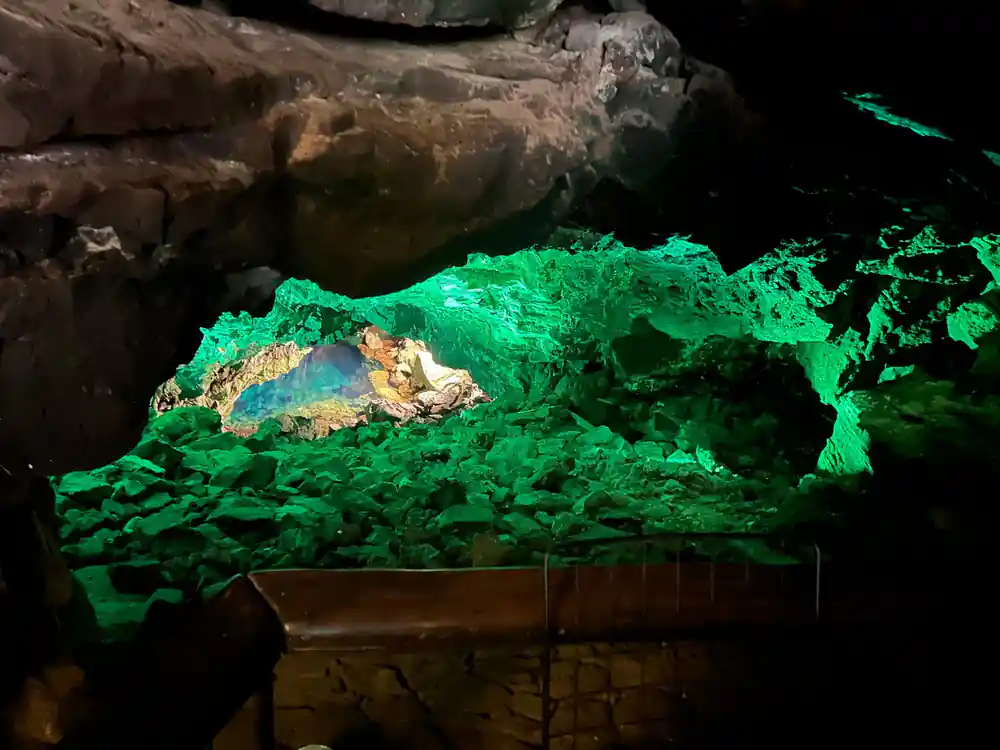
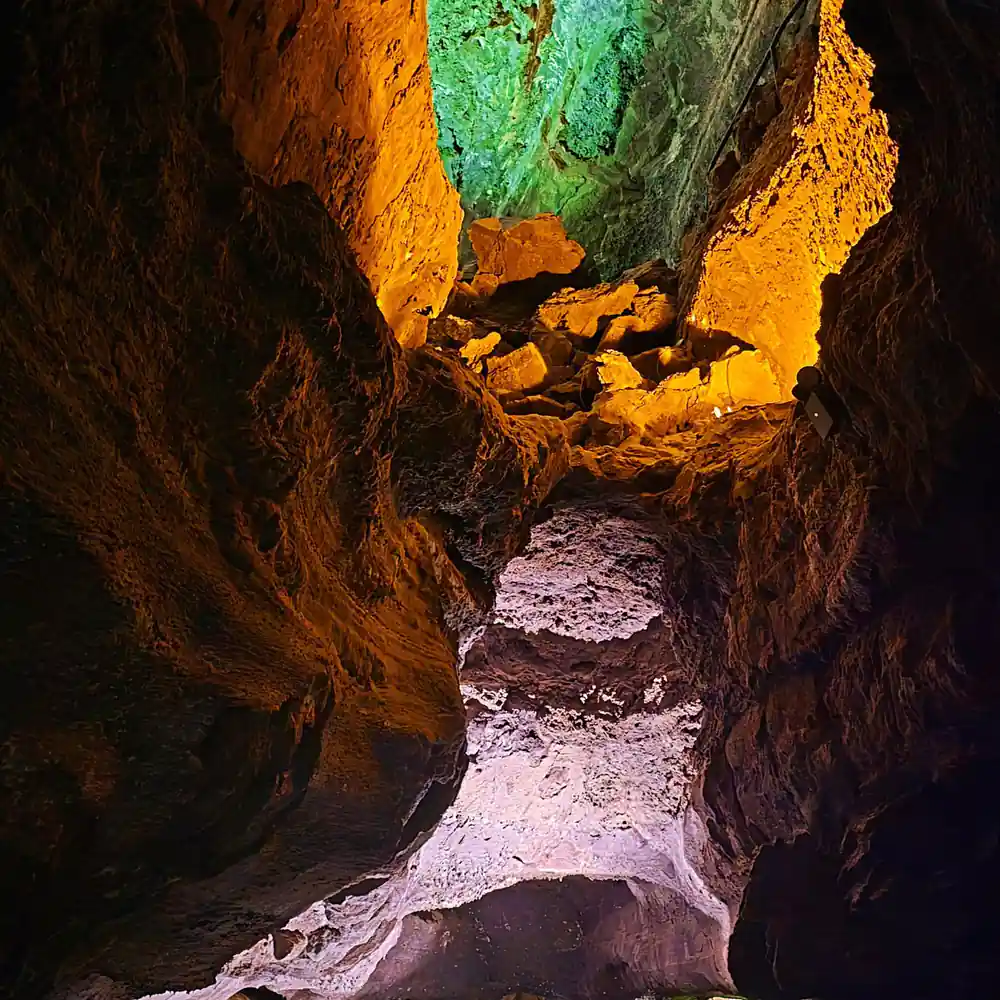
The lake forms as seawater filters through fissures in the volcanic tube
Day ticket, small-group morning, evening concert, or a guided day
At Jameos del Agua
Around the visit
César Manrique and the first CACT centre
CACT's own history of the site states that in 1968 the first Centre of Art, Culture and Tourism created by César Manrique opened here.[1] CACT does not credit him alone: it names Jesús Soto and numerous craftspeople, technicians and workers from Lanzarote as authors of Jameos del Agua too.[1]
The Spanish geological survey IGME singles out the tourist infrastructure at Jameos del Agua and Cueva de los Verdes, designed by César Manrique and Jesús Soto, as something that makes both caves unique worldwide.[2] CACT describes its centres as artistic interventions with over 60 years of history in natural spaces, classified as Cultural Heritage Assets under the highest heritage protection.[3]
What a jameo is, and the tube it belongs to
The name describes the geology. MITECO explains that lava tubes form when rivers of fluid lava solidify on the surface while lava keeps flowing inside, and that sometimes part of a tube's roof collapses from instability, leaving openings called jameos.[4]
Jameos del Agua sits on one of these tubes. IGME dates the La Corona tube to the eruption of the La Corona volcano about 25,000 years ago, and UNESCO describes it as a 7.6 km structure with various access points known as jameos.[2][5] Its last 1.6 kilometres are submerged, which UNESCO says makes it the longest submerged volcanic tube on the planet.[5]
Inside, IGME describes a complex of passages and superimposed galleries with vaults of up to 20 by 20 m and small interior lagoons.[2] It names Cueva de los Verdes, Jameos del Agua and the Túnel de la Atlántida as the three most valuable elements of the tube, and calls the submerged Atlántida section the most direct evidence of global sea-level change during the last glaciation.[2]
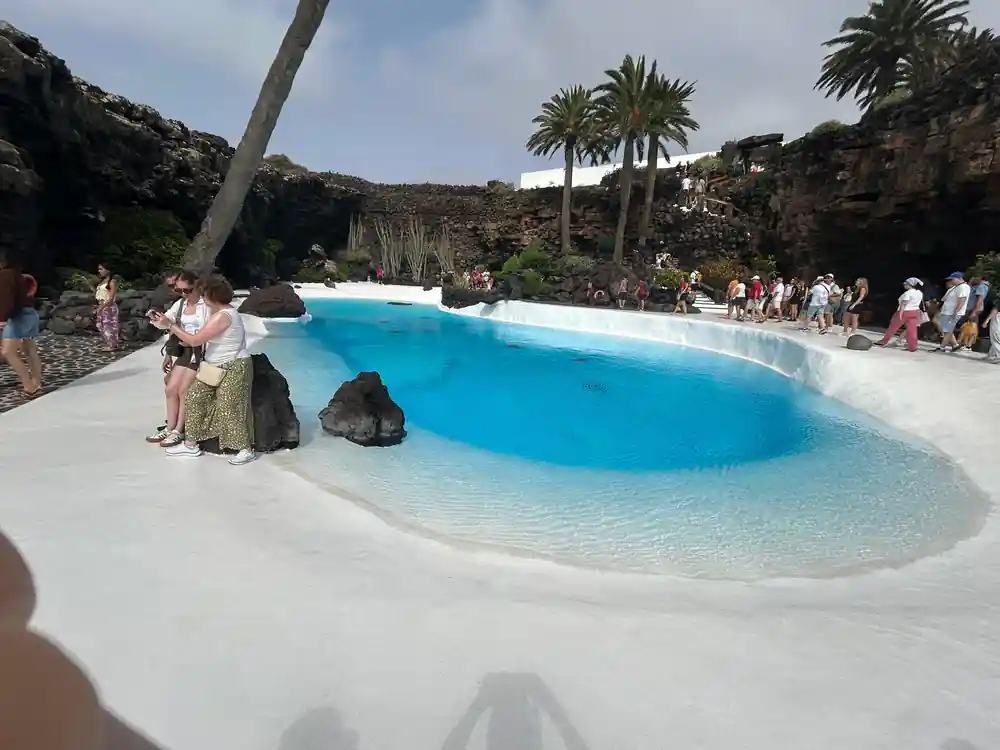
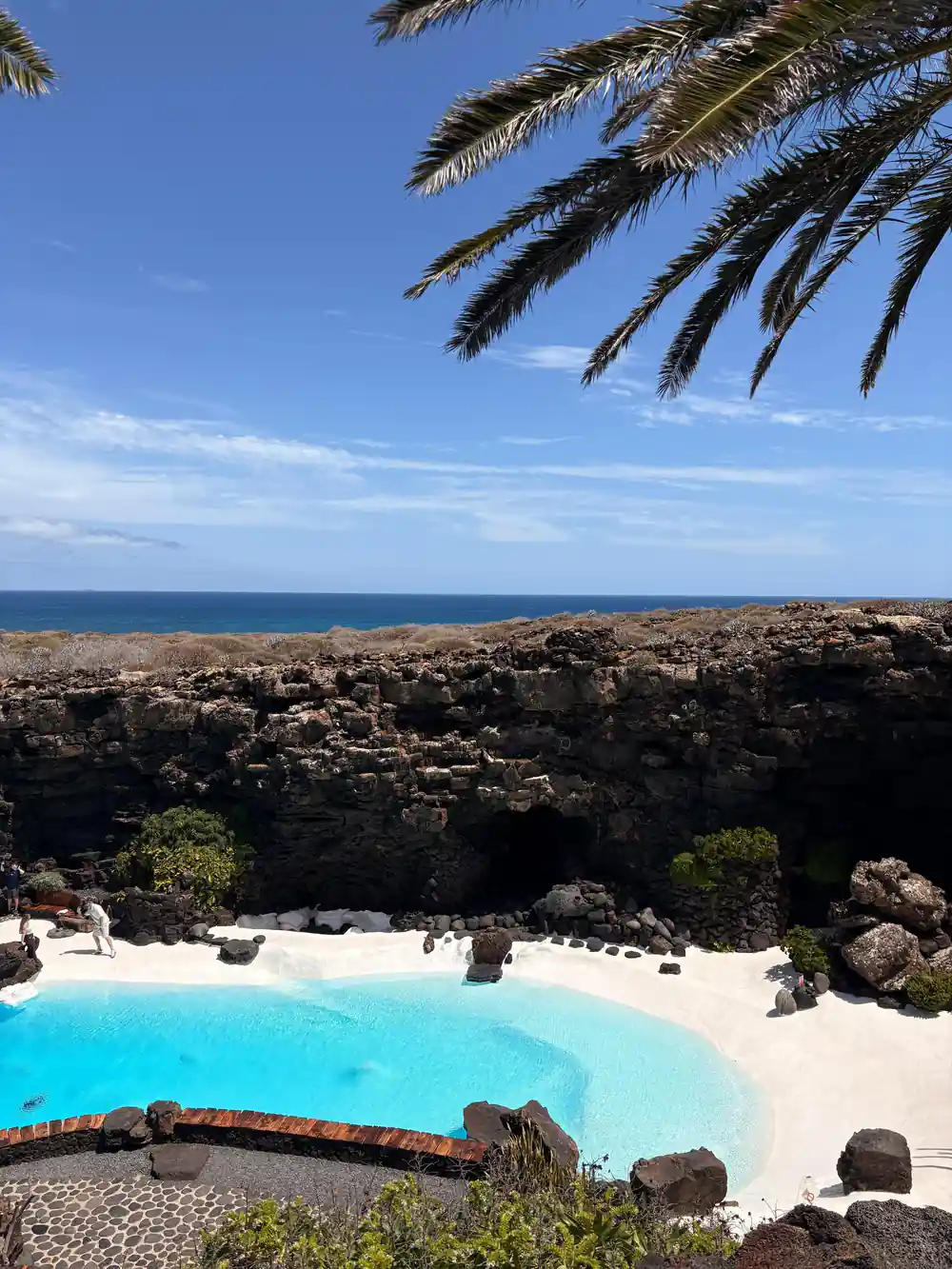
The white pool and palms of the Jameo Grande, set into the basalt
The lake of the blind albino crabs
The general ticket includes the descent through the Jameo Chico and the lake of the blind crabs.[1] CACT explains that the lake forms as seawater filters through fissures in the volcanic tube, and that its level follows the tides and can reach the access walkway during spring tides.[1]
The small white dots on the bottom are specimens of Munidopsis polymorpha, an endemic species adapted to darkness. To protect its habitat, CACT asks visitors not to throw coins or other objects into the water.[1] In its description of the evening concerts, CACT calls them the iconic blind albino crabs known as jameitos.[6]
Jameo Grande, the white pool and the Auditorium
In the Jameo Grande, the darkness of the cave opens onto an outdoor garden with palm trees, fig trees and cacti. CACT points to the white pool and the leaning palm tree as signs of how the design adapts to the basalt.[1] The general ticket also gives access to the Auditorium.[1]
Jameos del Agua also houses the Casa de los Volcanes, a geological museum that IGME says includes a general volcanological and geological exhibition about Lanzarote.[2] CACT puts the museum visit at around 60 minutes, including a room dedicated to César Manrique created with the César Manrique Foundation, and lists it as needing a ticket in addition to standard entry.[1]
The site is also used for science. MITECO lists Jameos del Agua as one of the three modules of the Laboratorio Geodinámico de Lanzarote, with the others at Cueva de los Verdes and inside Timanfaya National Park.[7] The Jameos del Agua restaurant serves dishes such as tortilla conejera or wreckfish with mojo sauces and Canarian wrinkled potatoes.[1]
1968
The year the first Centre of Art, Culture and Tourism created by César Manrique opened at Jameos del Agua.[1]
Noches de Jameos: dinner and a concert over the lake
CACT says that as a general rule the cafés and restaurants at its centres are not open during evening cultural events, but it offers a special Jameos Noche experience with dinner and a show.[3] Noches de Jameos combines gastronomy, music and the setting created by César Manrique, and ends with a concert overlooking the underground lake of the blind albino crabs.[6]
On those evenings the restaurant runs from 6:30 pm to 8:30 pm and the concert from 10:30 pm to 11:15 pm, and a table is held for up to 15 minutes after the booked time.[6] Jameos del Agua stays open until midnight, and the self-guided visit of about an hour fits into the same evening.[6] The standard menu is from €98 per person, the vegan menu from €88 and the children's menu from €49 per child for ages 7 to 12.[6]
Manrique at Timanfaya: El Diablo and the devil
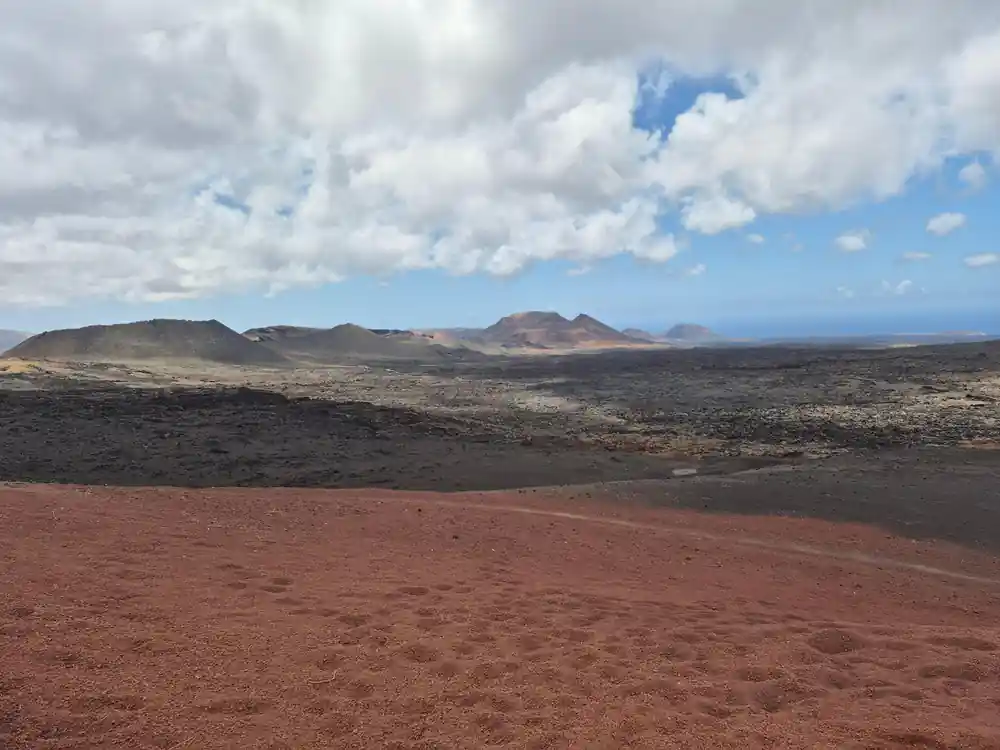
Manrique's work continues inside the national park. The Fundación César Manrique dates the intervention at Timanfaya National Park to 1970, and CACT says the Route of the Volcanoes coach tour was conceived by César Manrique.[8][9]
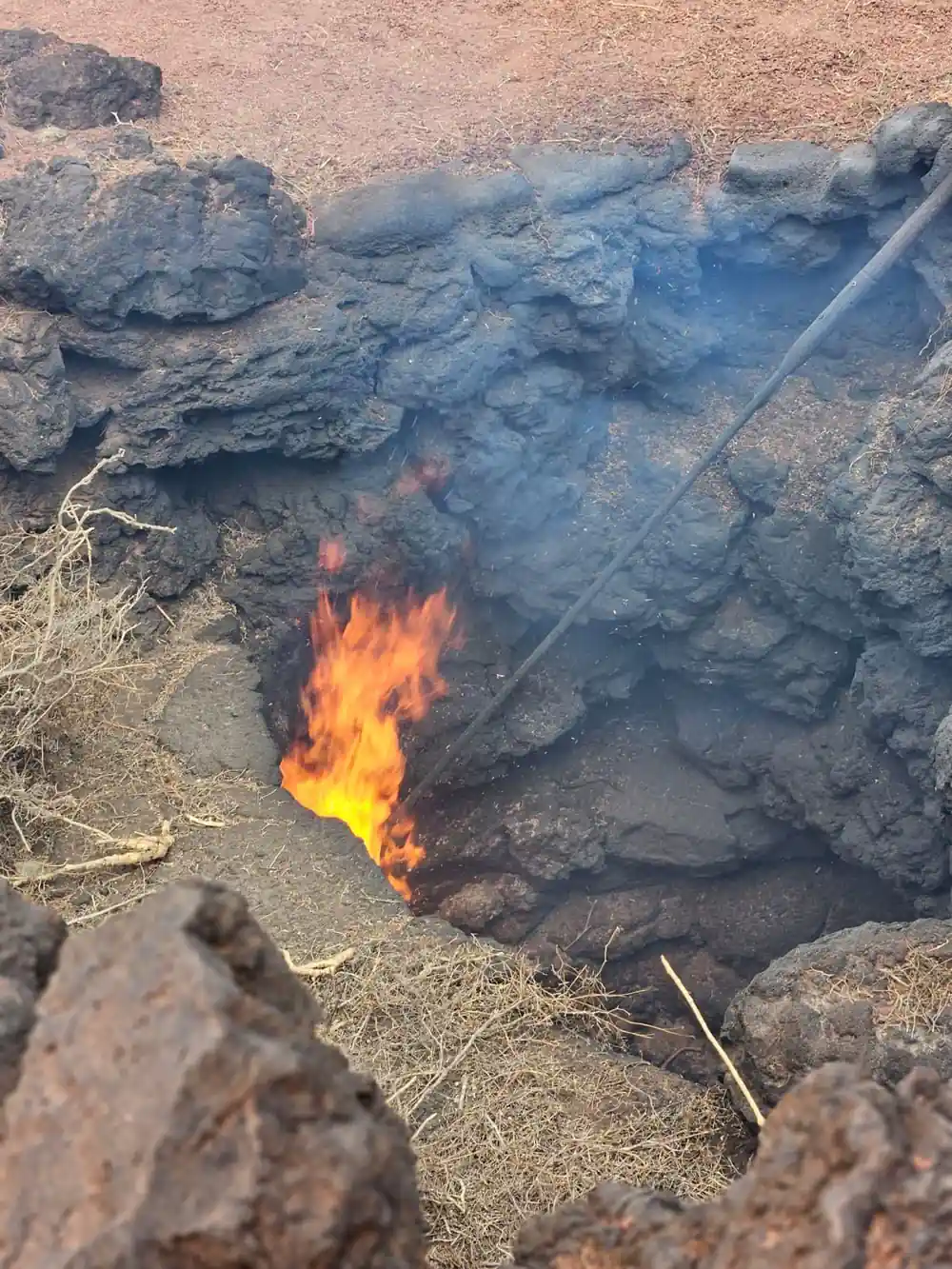
At El Diablo restaurant, the dining room conceived by Manrique opens onto the malpaís lava field through a large circular glass wall.[9] The grill sits above a five-metre well where the earth's natural temperature reaches around 250 degrees.[9] The Foundation also describes an oven in which natural heat is used to cook food.[8]
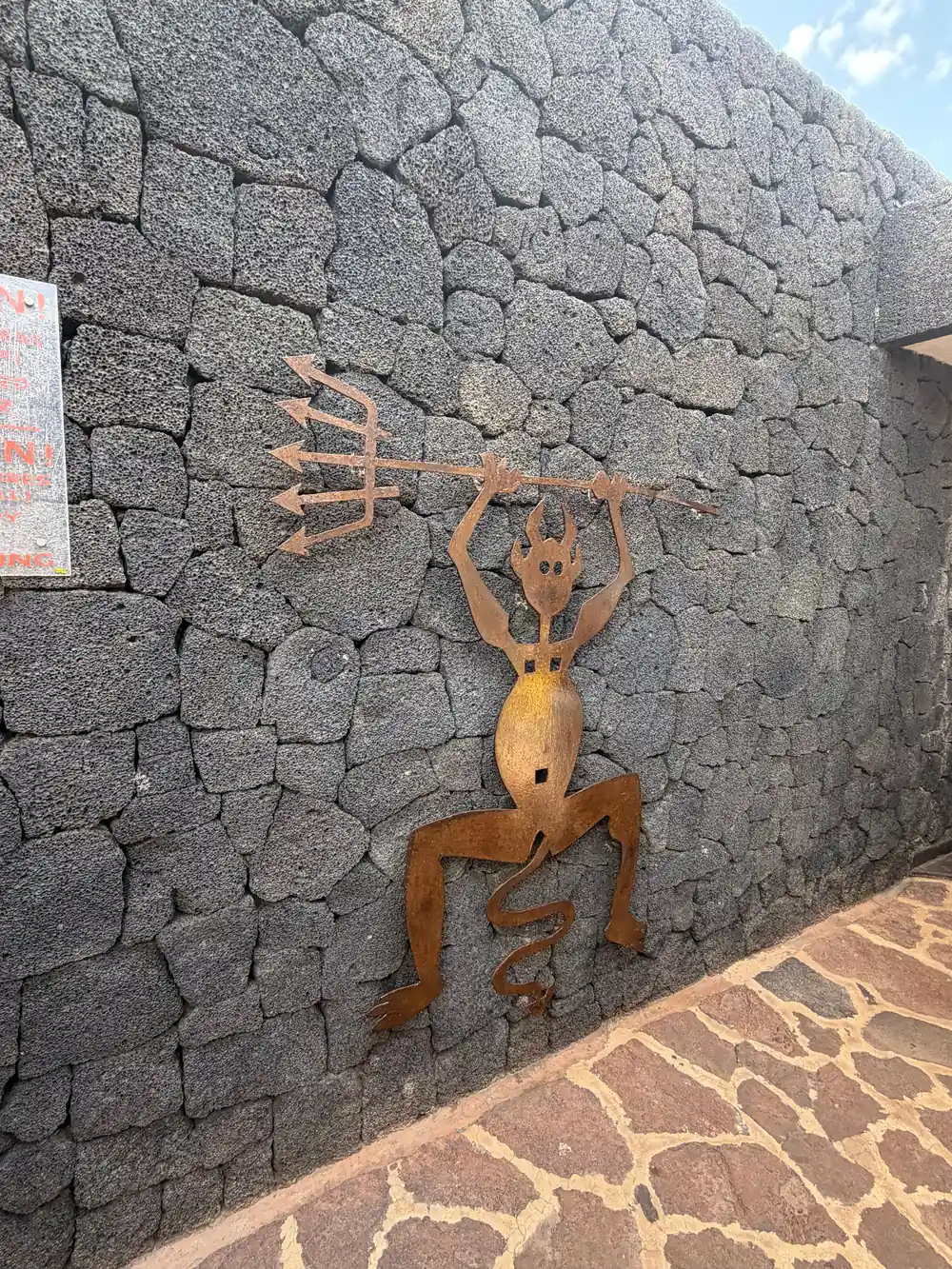
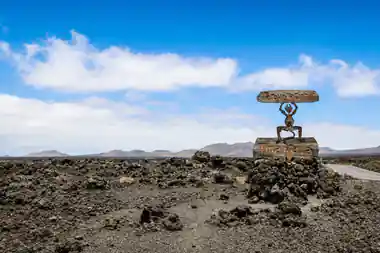
His hand is on the signs as well. MITECO notes the famous El Diablo logo designed by César Manrique on signs at the park's access points, made from the timber of decommissioned boats.[10] The DO Lanzarote wine appellation's logo is an image by the same artist, a black volcano seen from above with sheets of red lava and a golden circle.[11]
Planning a visit to Jameos del Agua
CACT lists Jameos del Agua as open every day from 10:00 to 18:00, with last admission at 17:15, a visit of 60 to 120 minutes, and tickets from €17.00.[1] A guided Insólita Experience runs at 09:45 on Tuesdays, Thursdays and Saturdays, lasting 2 hours, from €41.20.[1]
Cueva de los Verdes, on the same tube and with facilities IGME credits to Manrique and Soto, is open 09:30 to 16:45 every day, with a visit of about 50 minutes, tickets from €17.00 and children aged 0 to 6 free.[2][12] CACT says the lava left behind a hollow conduit more than seven kilometres long, the system Cueva de los Verdes and Jameos del Agua both belong to, and visitors walk about one kilometre of it on a guided visit in Spanish and English, through an atmosphere designed by Jesús Soto.[12] During the 16th and 17th centuries, local people used its galleries as a refuge from pirate raids from North Africa.[12]
CACT states Cueva de los Verdes is not accessible to people with reduced mobility and is not recommended for people with claustrophobia, as the route includes uneven paths, stairs, narrow spaces and low ceilings.[12] A fixed date and time must be booked online for Cueva de los Verdes and Montañas del Fuego.[13] The GetYourGuide tour booked from this site lists Timanfaya National Park, Cueva de los Verdes and Jameos del Agua as its stops, over 9 hours, with pickup and a live guide in English, French, German or Spanish.[14]
The La Corona lava tube, in kilometres
Tube and submerged lengths per UNESCO; the stretch walked in Cueva de los Verdes per CACT.[5][12]
Price a guided tour to Jameos del Agua
Each amount is that listing's own "from" price in US dollars, and the calculator applies the same listed figure to every traveller.[14][16][17]
Times to know at Jameos del Agua
Through Jameos del Agua
Descend through the Jameo Chico
The general ticket starts with the descent through the Jameo Chico.[1]
Find the white dots in the lake
They are Munidopsis polymorpha, an endemic crab adapted to darkness.[1]
Keep your coins in your pocket
CACT asks visitors not to throw coins or objects into the water.[1]
Step out into the Jameo Grande
The cave opens onto a garden of palm trees, fig trees and cacti around a white pool.[1]
Reach the Auditorium
Access to the Auditorium is part of the general ticket.[1]
Visit Jameos del Agua, Cueva de los Verdes and Timanfaya in one day
from US$103Reserve now & pay later