The essentials
- The Film Commission's list of other-planet films shot in Timanfaya includes Enemy Mine, Krull, Mission Stardust, Stranded and Operation Ganymed.[1]
- Eternals (2020) was filmed at Volcán del Cuervo, between Mozaga and Uga, described as the first of the Timanfaya eruptions.[1]
- CACT states Timanfaya was chosen for its geological conditions to prepare part of astronauts' training before planetary expeditions.[4]
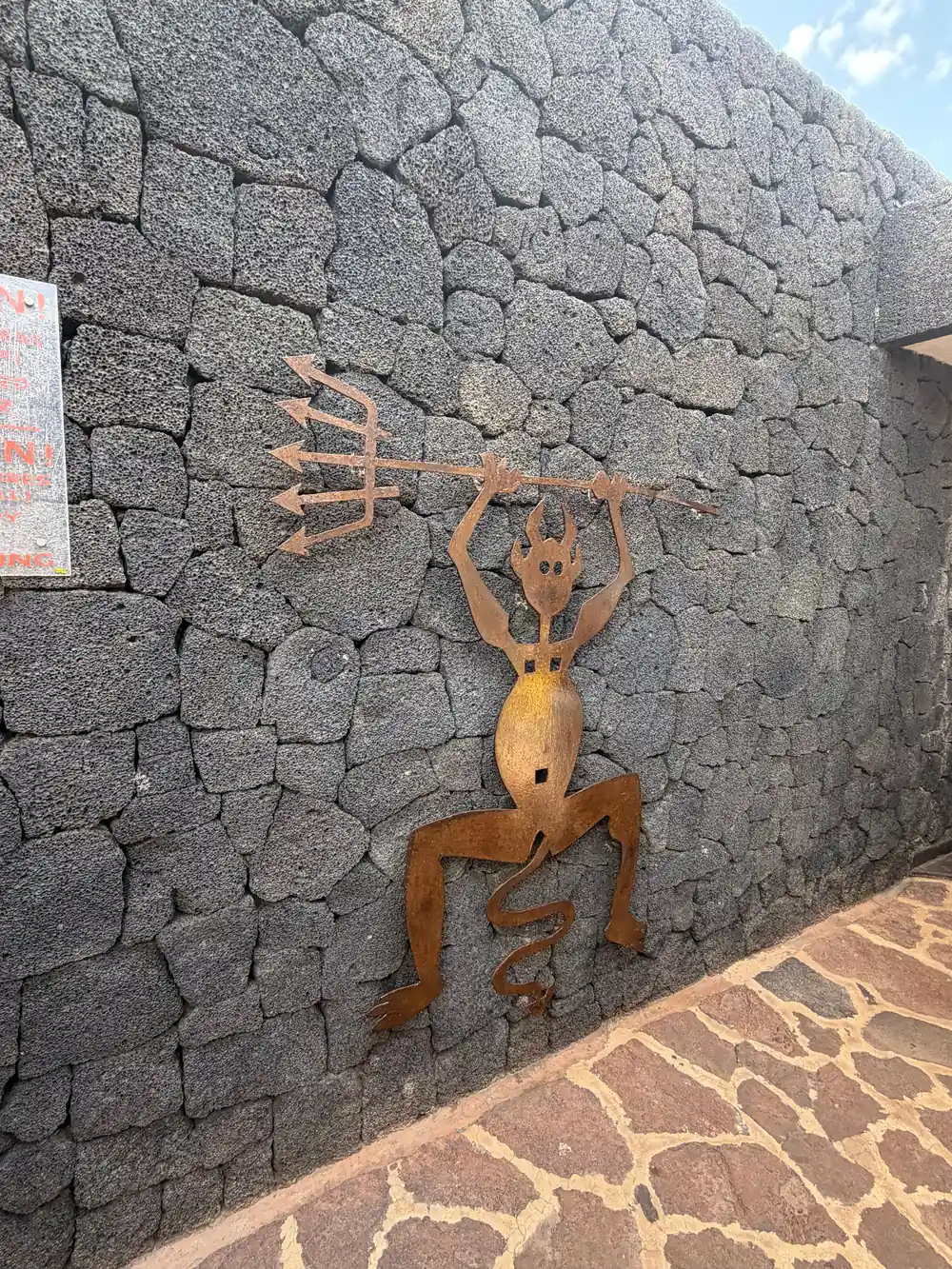
- MITECO credits César Manrique with the El Diablo logo, and the Devil sculpture welcomes visitors on the road to Montañas del Fuego.[4][11]
- UNESCO declared the whole of Lanzarote, with all its towns, a Biosphere Reserve on 7 October 1993.[12]
| Eternals (2020) | Other-planet films | Other genres | |
|---|---|---|---|
| Titles | Eternals[1] | Enemy Mine, Krull, Mission Stardust, Stranded[1] | Zorro, Aida, Mararía, Take a Hard Ride[1] |
| Genre | Hollywood blockbuster[1] | Films inspired by other planets[1] | Post-apocalyptic, adventure, drama, western[1] |
| Where filmed | Volcán del Cuervo, between Mozaga and Uga[1] | Timanfaya[1] | Timanfaya[1] |
| The location | The first of the Timanfaya eruptions[1] | One of the largest historic lava fields[5] | Latent volcanic activity unique in Europe[16] |
Timanfaya National Park is one of the most impressive volcanic landscapes in the world
Lanzarote is pure geology, underwater and moon-like landscapes, pristine water, thirsty land
Film locations, space links and legends: where to see them
Screen and space links
- Films inspired by other planets shot in Timanfaya include Enemy Mine and Krull.[1]
- Eternals (2020) was filmed at Volcán del Cuervo in La Geria.[1]
- Timanfaya has been chosen to prepare part of astronauts' training for planetary expeditions.[4]
- Professional filming in the park needs a special permit from its offices.[2]
Legends and symbols
- The Jardín Muerto inside El Diablo pays tribute to the legend of Hilario.[4]
- César Manrique drew El diablo in ink on paper in 1968.[9]
- The Valle de la Tranquilidad on the coach route is named after the Moon's Sea of Tranquility.[4]
- CACT recommends photographing the Devil figure at Montañas del Fuego.[4]
The films shot in Timanfaya's lava fields
The Lanzarote Film Commission publishes a cinema route called "Timanfaya: a volcano of film".[1] Its own list of films inspired by other planets and shot in Timanfaya includes Enemy Mine, Krull, Mission Stardust, Stranded and Operation Ganymed.[1]
The list goes beyond science fiction. The Film Commission says the geological power of the landscape has also given rise to post-apocalyptic films such as Spectrum (Beyond the World's End), Rational Animals and The Possibility of an Island, adventure films such as Zorro and Aida, the dramas Mararía and Rostros, and even a western, Take a Hard Ride.[1]
Shooting inside the park is regulated. MITECO's list of park rules states that professional photography, video, film and TV work requires a special permit, requested at the National Park's own offices.[2]
Eternals at Volcán del Cuervo and the green lagoon
The Film Commission says the Hollywood blockbuster Eternals (2020) was recently filmed at Volcán del Cuervo. The Film Commission places that volcano between Mozaga and Uga, in the heart of the Protected Landscape of La Geria, and describes it as the first of the Timanfaya eruptions.[1]
On the west coast, the Charco de los Clicos viewpoint at El Golfo has served as the backdrop for 14 films, according to the Film Commission, reached by a small path that climbs to a good height above the landscape.[1] The Ayuntamiento de Yaiza describes the Charco de los Clicos as a lagoon connected to the sea by underground cracks and separated from it by a sand beach, green because of the large quantity of plant organisms suspended in its water.[3] It sits inside El Golfo, which lies within the Parque Natural de los Volcanes.[3]
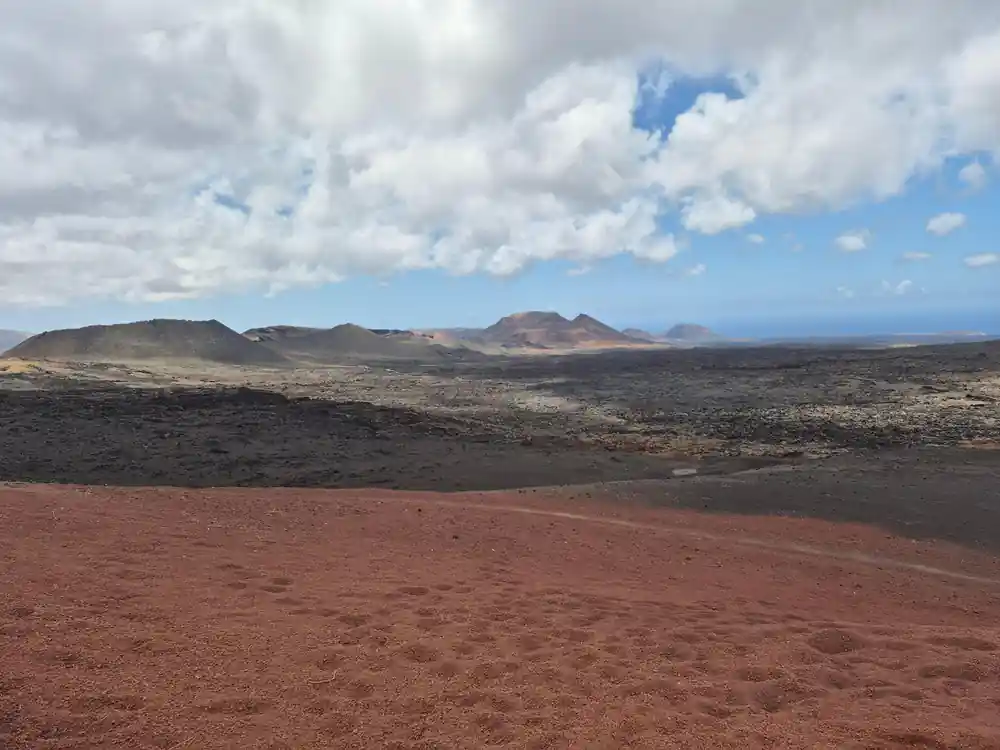
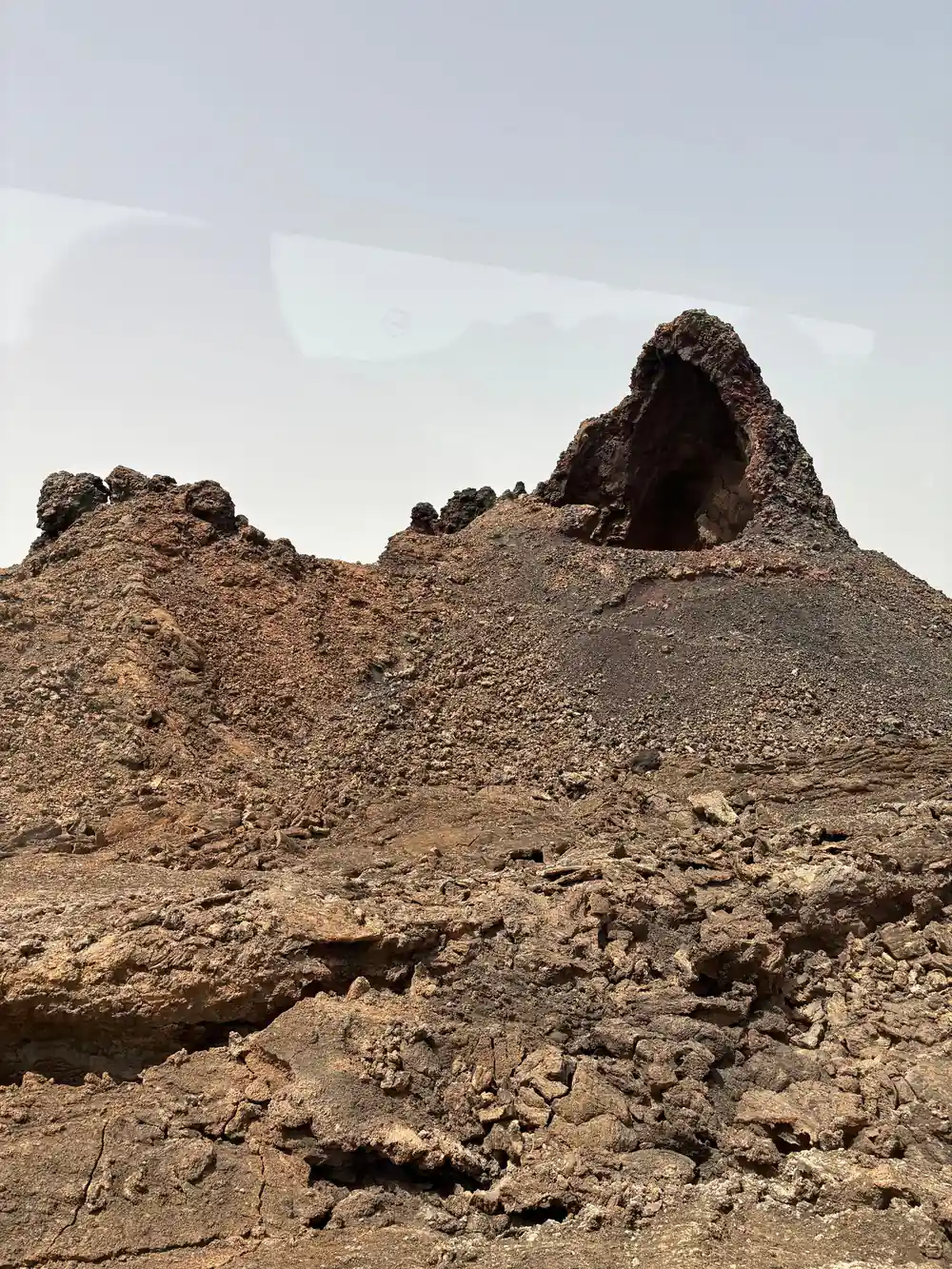
Lava fields that film crews have used to stand in for other planets
A landscape used to train astronauts
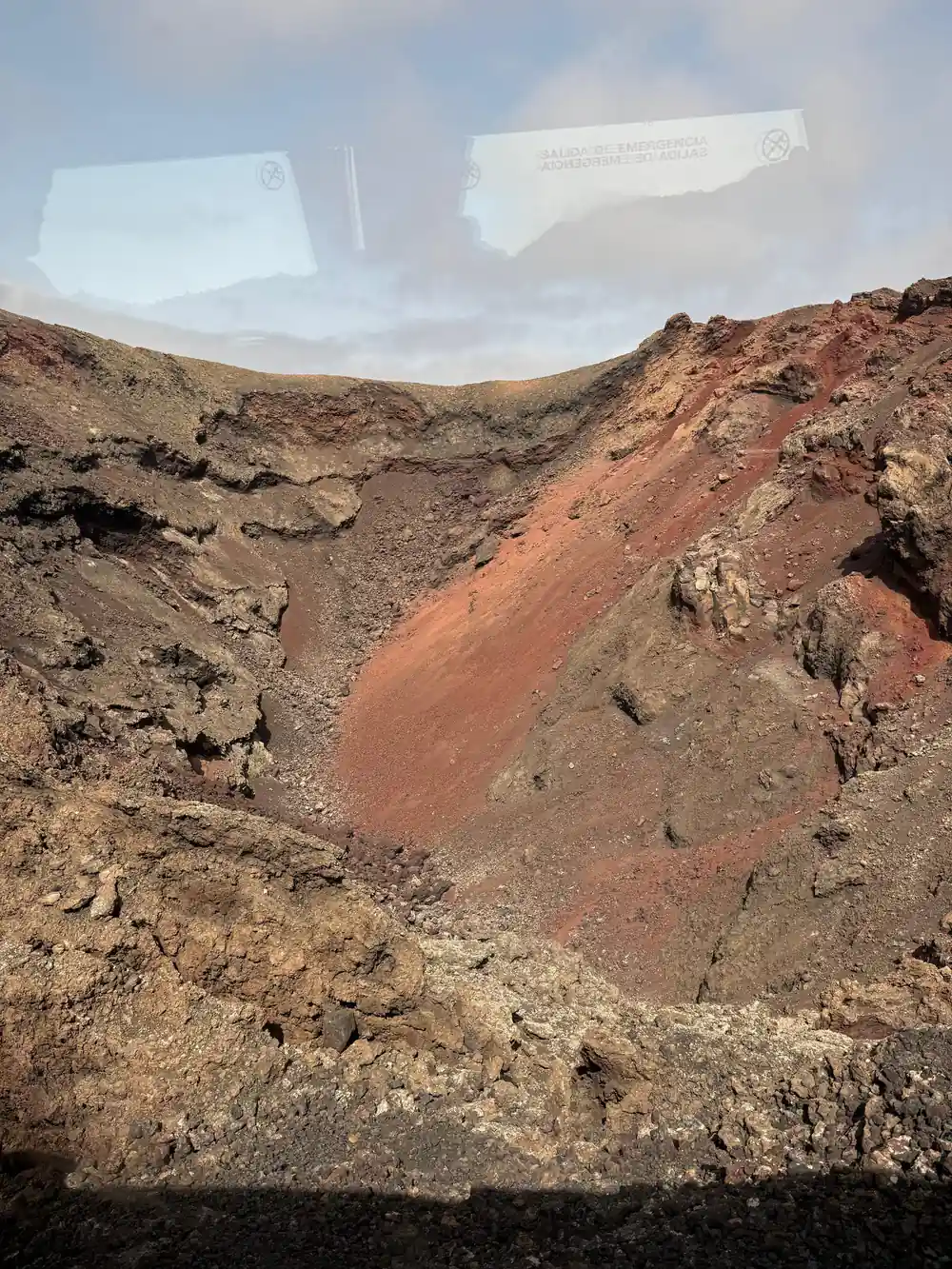
CACT states that Timanfaya has been chosen for its geological conditions to prepare part of astronauts' training before planetary expeditions.[4] The same operator describes the scenery at Montañas del Fuego as craters, lava flows and lunar-like landscapes that reflect the heat of the earth.[4]
The space theme reaches the coach route too. On the Route of the Volcanoes, the Valle de la Tranquilidad takes its name from the Moon's Sea of Tranquility, where Apollo 11 landed, according to CACT.[4] UNESCO's own Geopark page sums the island up as pure geology, underwater and moon-like landscapes, pristine water and thirsty land.[5]
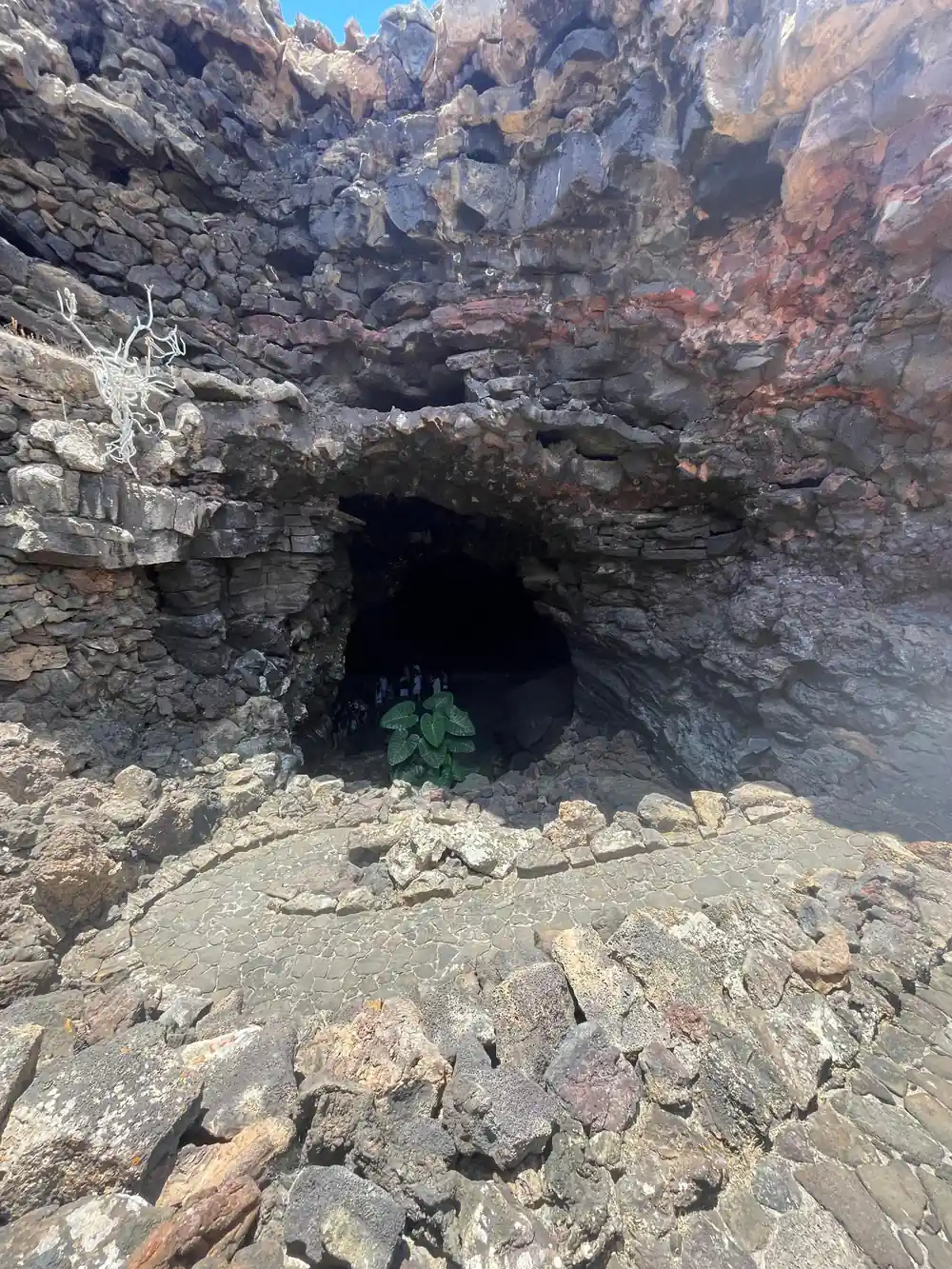
The lichens on the lava draw a comparison with space too. A University of La Laguna paper in the journal Vieraea says lichens are almost the only living things able to colonise the lavas that cover most of the park, and that researchers have called them authentic champions of survival in the most hostile conditions, able even to survive the conditions of outer space.[6]
Islote de Hilario and the legend in the restaurant
Islote de Hilario is the main core of Montañas del Fuego, with a car park, cafeteria, restaurant, souvenir shop and restrooms, according to MITECO.[7] CACT says the view from it opens onto a sea of lava with more than 25 craters concentrated in just a few square kilometres.[4]
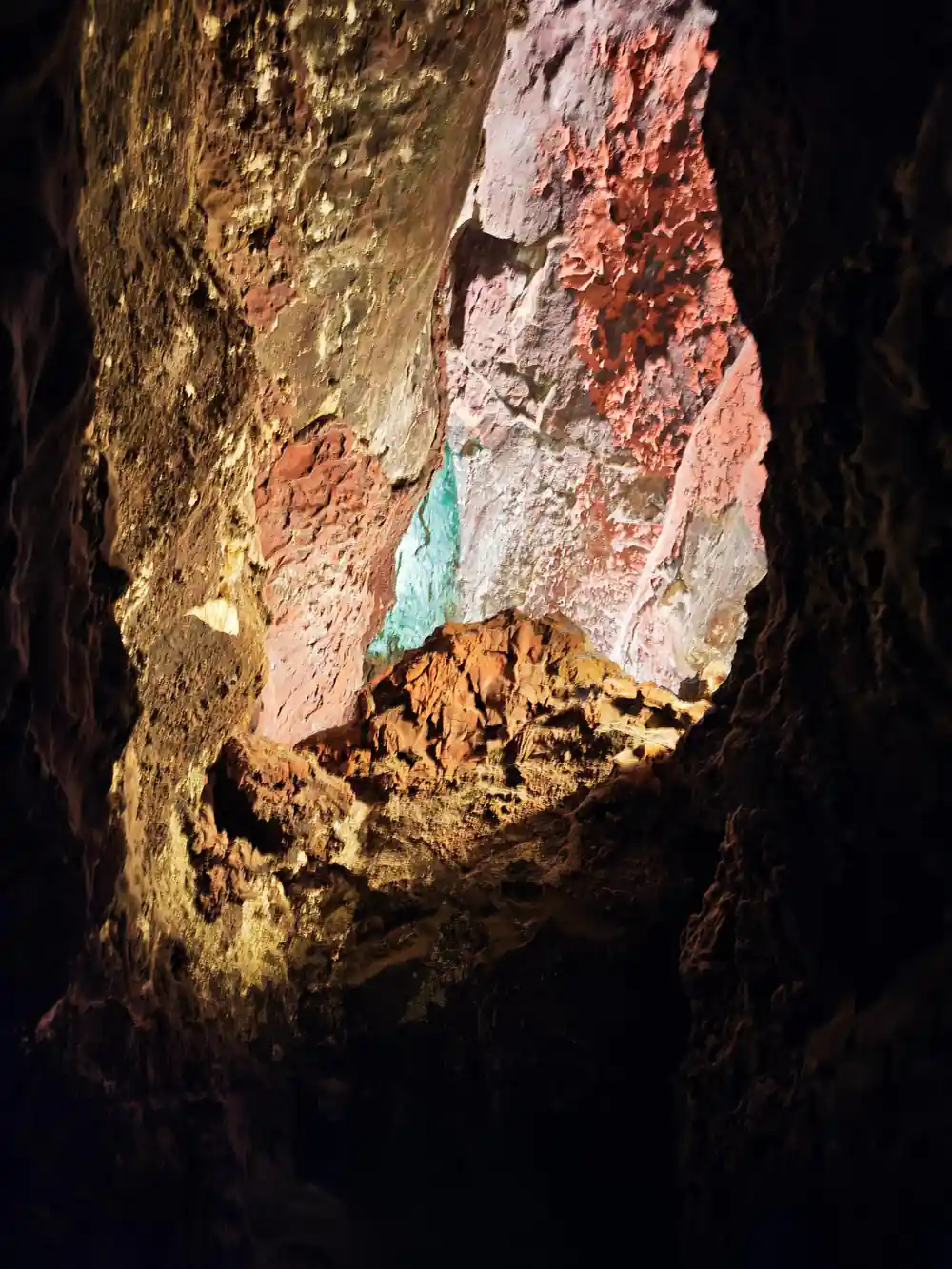
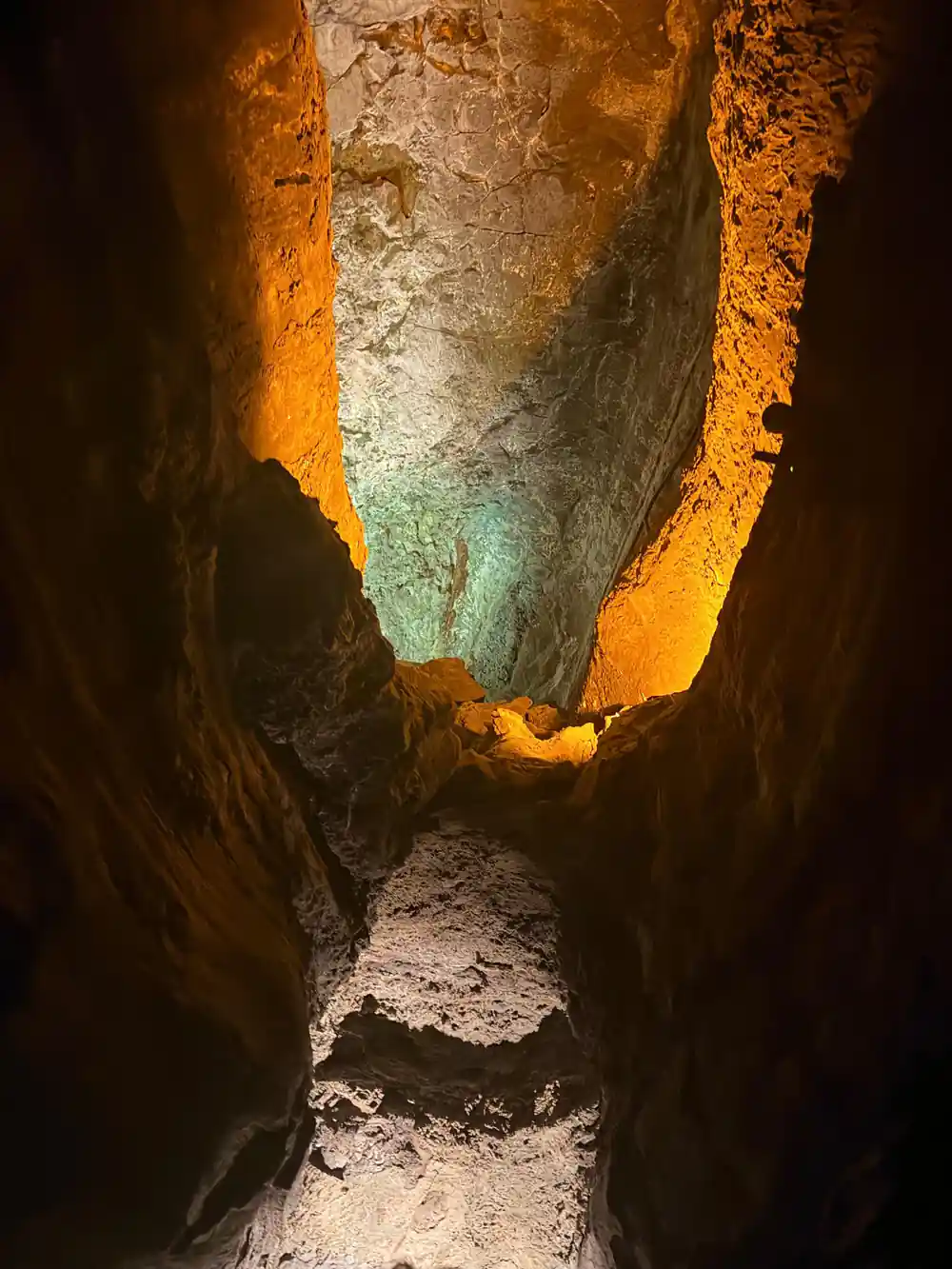
Inside the El Diablo restaurant, CACT keeps a tribute to a local story. In the centre of the restaurant, a small glazed garden called the Jardín Muerto pays tribute to the legend of Hilario, with the skeleton of a dromedary and the trunk of a dry, burned tree laid on volcanic ash.[4]
CACT says the subsoil of Islote de Hilario still holds part of the earth's heat, and IGME's geosite page gives a surface temperature of about 250°C in its description and 100 to 120°C in its scientific-interest section, with more than 600°C at 13 metres depth.[4][8] The demonstrations for visitors include an artificial geyser made by pouring cold water into boreholes, and plants placed in a hole to show them burn.[8]
14 films
The Charco de los Clicos viewpoint at El Golfo has served as the backdrop for 14 films, per the Lanzarote Film Commission.[1]
The devil emblem and who drew it
The Fundación César Manrique's catalogue lists El diablo by César Manrique as an ink-on-paper work from 1968, measuring 47.5 by 36 cm.[9] The Foundation dates the intervention at Timanfaya National Park itself to 1970.[10]
Today CACT calls the sculpture of the Devil of Timanfaya the symbol of the National Park, standing on the road to Montañas del Fuego to welcome visitors.[4] At the park's access points, MITECO notes signs carrying the famous El Diablo logo designed by César Manrique, made from the timber of decommissioned boats.[11]
The devil figure is also on CACT's list of subjects it recommends photographing at Montañas del Fuego, alongside the geyser area, the natural oven and the Route of the Volcanoes.[4]
An island-wide Biosphere Reserve and a Geopark
The Biosphere Reserve covers far more than the park. The Gobierno de Canarias states that Lanzarote as a whole, with all of its towns, was declared a Biosphere Reserve by UNESCO on 7 October 1993.[12] MITECO's fact sheet for the park lists its international recognitions as Biosphere Reserve (1993) and ZEPA (1994).[13]
The same regional government says the diversity of endemic species, the uniqueness of the island's ecosystems and the beauty of its landscapes are behind 41.6% of Lanzarote's surface being covered by some category of the Canary Islands' protected natural spaces network.[12] Lanzarote was also named a World Geopark in 2015, and UNESCO's Geopark page names Timanfaya as the most significant of nearly seventy geosites, home to one of the largest historic lava fields in the world.[1][5]
The national park itself is older than both titles. MITECO gives its founding instrument as Decreto 2615/1974, of 9 August, and its total surface as 5,107.50 ha.[13]
What the first witnesses wrote
The best-known written account of the eruption, per MITECO, is the manuscript of the parish priest of Yaiza, Don Andrés Lorenzo Curbelo, which follows events from the start of the eruption until the local population emigrated between 1731 and 1732.[14] The eyewitness account MITECO publishes records that on 1 September 1730, between nine and ten at night, the earth suddenly opened near Timanfaya, two leagues from Yaiza, and that a huge mountain rose with flames that kept burning for nineteen days.[14]
The account records that on 7 September a large rock rose with a noise like thunder, forcing the lava to change course towards the NW and WNW and destroying the villages of Maretas and Santa Catalina in an instant.[14] On 11 September the eruption renewed with more force, burying the village of Mazo and running to the sea for six days in a row with a terrifying noise, forming real waterfalls of lava.[14] The same account records large numbers of dead fish floating on the sea and washing up on the shore.[14]
A second clergyman wrote about the eruption of 1824. MITECO notes the account of the priest of San Bartolomé, Don Baltasar Perdomo, who described the three volcanoes of 1824: Tao, Volcán Nuevo del Fuego and Tinguatón.[14]
Protected land around Timanfaya, in hectares
Park surface per MITECO; the Yaiza share and the surrounding natural park per the Ayuntamiento de Yaiza.[3][13]
Price a Timanfaya tour for your group
Each amount is that listing's own "from" price in US dollars, and the calculator applies the same listed figure to every traveller.[15][17][18]
Dates behind the films and legends
The film and legend trail
Pass the Devil on the way in
The Devil of Timanfaya sculpture welcomes visitors on the road to Montañas del Fuego.[4]
Stand on Islote de Hilario
The view opens onto a sea of lava with more than 25 craters.[4]
Ride the Route of the Volcanoes
The Route of the Volcanoes coach route was conceived by César Manrique, with an audio narrative.[4]
Find the Valle de la Tranquilidad
Its name refers to the Moon's Sea of Tranquility, where Apollo 11 landed.[4]
See the Jardín Muerto
The glazed garden inside El Diablo pays tribute to the legend of Hilario.[4]
See the lava fields film crews chose, on a guided day
from US$103Reserve now & pay later